
Black Cuckoo in Uganda: Complete Guide to This Elusive Forest Bird
Uganda is one of Africa’s rewarding destinations for birdwatching, offering an extraordinary variety of habitats, from tropical rainforests and wetlands to open savannahs, riverine woodland, and mountainous landscapes; Among the fascinating bird species that birdwatchers can encounter in the country is the Black Cuckoo in Uganda (Cuculus clamosus), a distinctive African cuckoo known for its dark plumage, characteristic calls, and secretive behavior; Although it may be easier to hear than to see, the Black Cuckoo is an interesting species for birdwatchers exploring Uganda’s forests and woodlands. Its presence adds to the country’s remarkable bird diversity and makes it a worthwhile species to look and listen for during a guided birding safari.
For travelers interested in African birds, the Black Cuckoo offers an opportunity to discover the fascinating world of cuckoos, their unusual breeding strategies, and the habitats that support them; At Arcadia Safaris, we help travelers discover Uganda’s natural heritage through private birdwatching safaris, wildlife tours, primate experiences, and customized journeys across East Africa. In this guide, we explore the Black Cuckoo in Uganda, including how to identify it, its habitat and behavior, its calls, where birdwatchers may encounter it, and how to include birdwatching in a Uganda safari.
What is the Black Cuckoo?
The Black Cuckoo is a member of the cuckoo family, Cuculidae, and its scientific name is Cuculus clamosus. It is an African bird found across parts of sub-Saharan Africa, including Uganda. It belongs to a family known for its varied plumage, distinctive vocalizations, and, in many species, an unusual reproductive strategy known as brood parasitism. The Black Cuckoo is particularly interesting because its dark appearance can make it difficult to distinguish among shaded branches and dense vegetation. Birdwatchers often locate it by listening for its call before attempting to observe the bird itself.
In Uganda, the species has been recorded in several locations, including Kibale National Park and Lake Mburo National Park. These records demonstrate its occurrence in the country, although sightings at any particular location are never guaranteed. For birdwatchers visiting Uganda, identifying the Black Cuckoo can be a rewarding addition to a birding checklist, especially when exploring woodland and forest-edge habitats.
Appearance and Identification
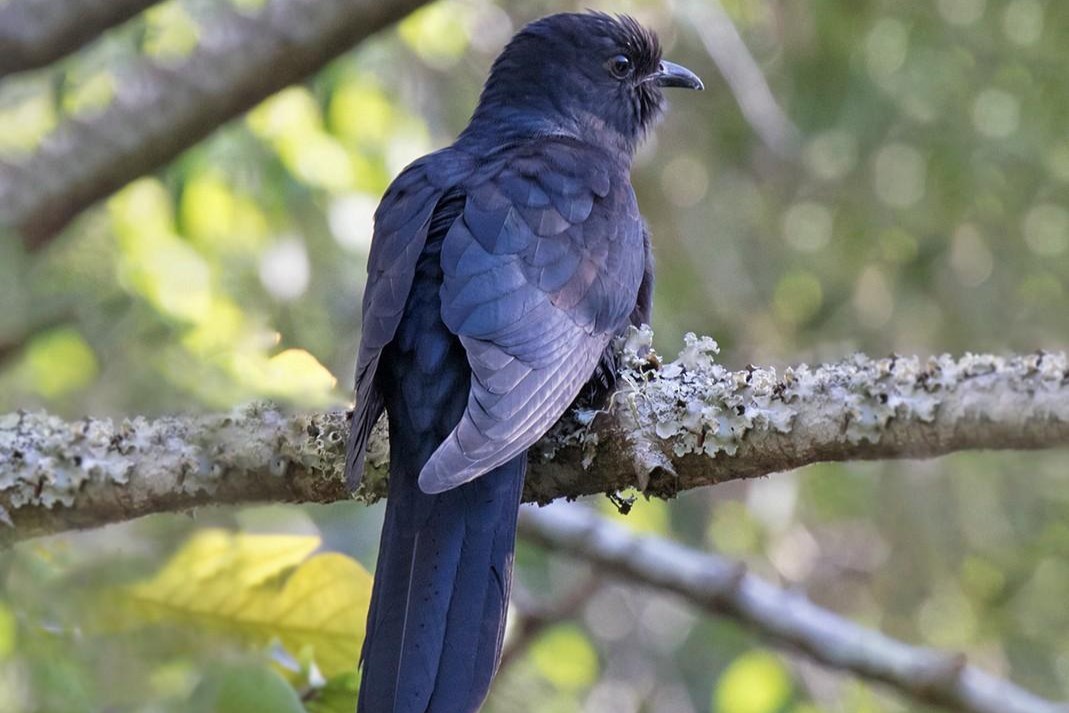
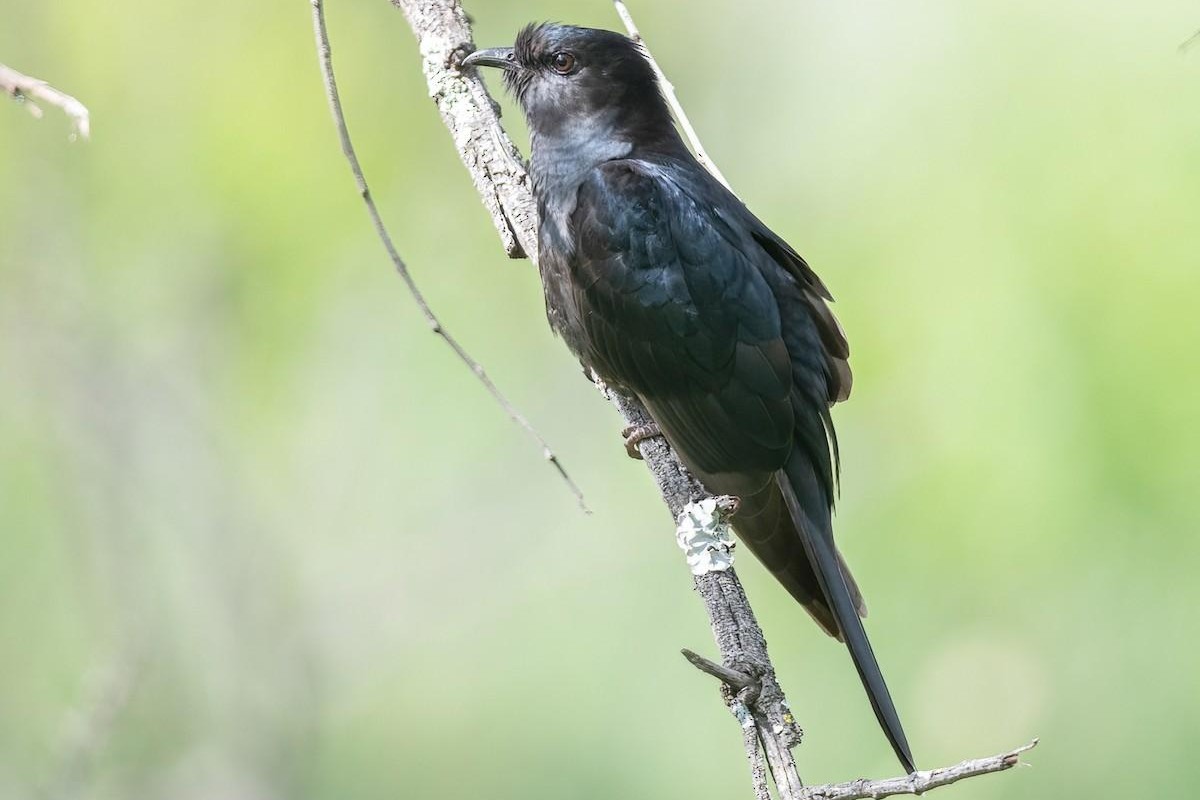
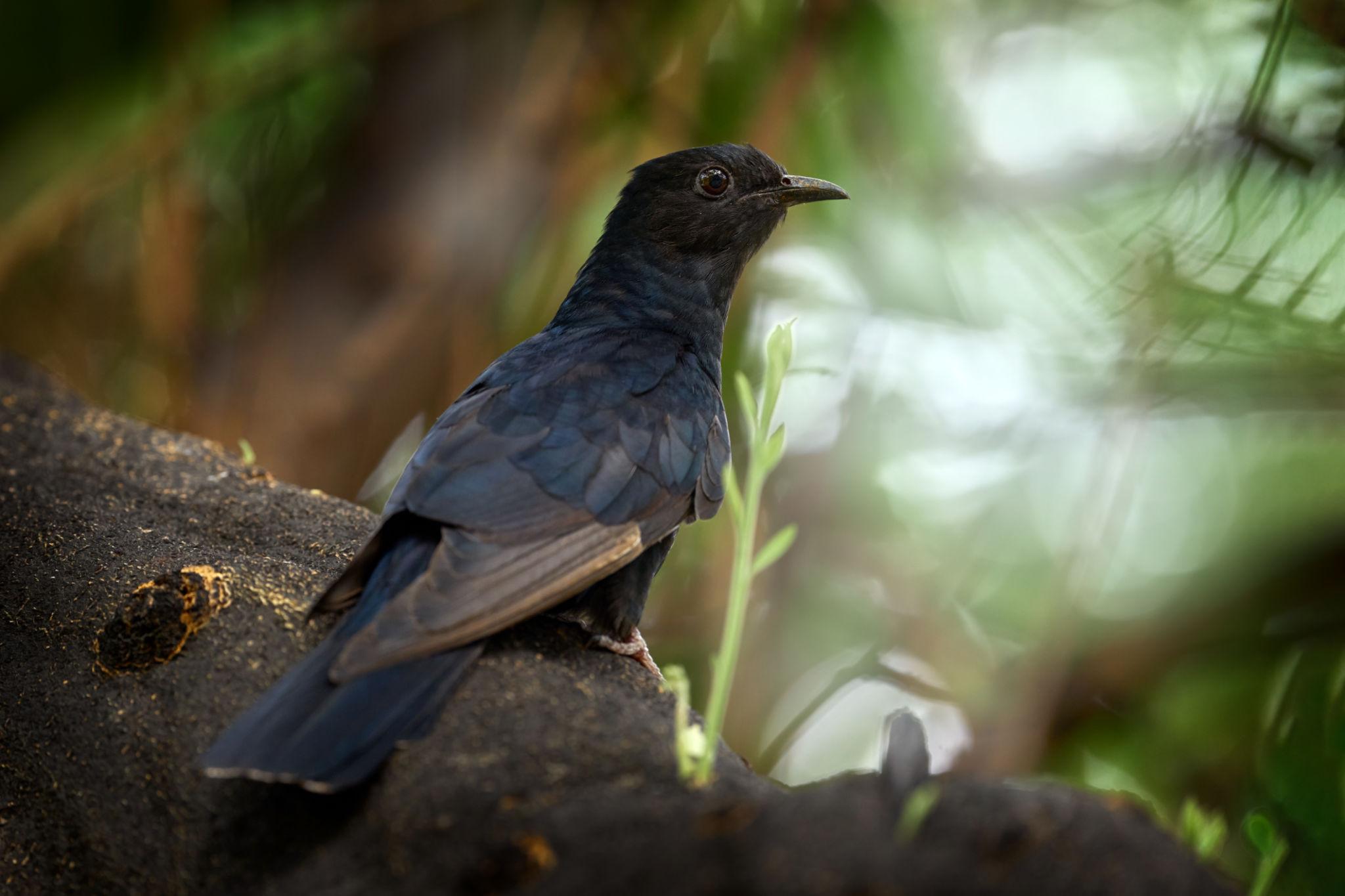
The Black Cuckoo is a medium-sized cuckoo, measuring approximately 29–31 cm in length. Adults are predominantly glossy black, often with a greenish sheen on the upperparts. The tail is long and typically shows a white tip. Some individuals, particularly females or intermediate morphs, display rufous or brown barring on the underparts. The bill, legs, and feet are dark, and the eyes are brown. In the field it can appear all-dark and somewhat hawk-like in flight. Its distinctive vocalisations are often the best clue to its presence.
Male and female Black Cuckoos: Male and female Black Cuckoos can be difficult to distinguish in the field. Plumage details and vocalizations may provide clues, but a brief observation is not always sufficient to determine the bird’s sex confidently. For birdwatchers, the most reliable approach is to consider several features together, including appearance, call, behavior, and habitat.
Where to See Black Cuckoo in Uganda
Uganda offers a range of suitable habitats for the Black Cuckoo, although the species is more often heard than seen and sightings are never guaranteed. Success depends on habitat quality, season, local movements, and calling activity. The following destinations are among the most relevant when planning a broader Uganda birding safari.
Kibale Forest National Park
Kibale is one of Uganda’s premier destinations for forest biodiversity and primate viewing. Its forest habitats, woodland edges, and surrounding landscapes support a wide variety of birds, and the Black Cuckoo has been recorded in the area. Birdwatchers can combine searches for cuckoos and other woodland species with chimpanzee tracking and a visit to the nearby Bigodi Wetland Sanctuary, making Kibale an excellent multi-interest stop.
Lake Mburo National Park
Lake Mburo is characterised by savannah, acacia woodland, lakes, and rich birdlife. The Black Cuckoo has been recorded in the park and its surrounds. A guided birding excursion here can combine woodland bird searches with observations of the park’s other wildlife, including zebra, impala, buffalo, and a variety of wetland and savannah birds.
Queen Elizabeth National Park
Queen Elizabeth National Park offers a diverse mix of habitats, including savannah, woodland, forest edges, and crater areas. The Black Cuckoo has been recorded in suitable wooded sections of the park. Birdwatchers can search for the species while enjoying classic game drives, boat cruises on the Kazinga Channel, and opportunities to see a wide range of other birds and mammals.
Murchison Falls National Park
Murchison Falls National Park contains extensive savannah, riverine woodland, and forest-edge habitats along the Nile. The Black Cuckoo has been noted in appropriate wooded areas within the park. Visitors can combine targeted birding for woodland species with game drives, boat safaris to the base of the falls, and viewing of the park’s rich mammal and bird diversity.
Local guides familiar with the Black Cuckoo’s distinctive call and preferred perches significantly improve the chances of a successful encounter in any of these destinations.
What Does the Black Cuckoo Eat?
The Black Cuckoo feeds mainly on insects and other small invertebrates. Caterpillars, especially hairy caterpillars that many other birds avoid, form an important part of its diet. The bird actively searches among foliage and branches for suitable prey and may also capture other insects such as termites, ants, beetles, and grasshoppers. On occasion it may take birds’ eggs or nestlings.
This insect-based diet makes wooded and forest-edge habitats particularly important, as trees and shrubs support the rich insect communities on which the species depends; By feeding on caterpillars and other invertebrates, the Black Cuckoo plays a role in the wider food webs that sustain Uganda’s woodlands and forests.
When foraging, the bird often moves quietly through the canopy or mid-levels, searching among leaves, shifting between branches, or watching from a perch before pursuing prey. Observing these behaviours can help birdwatchers locate the species even when it remains partially hidden in the foliage.
Breeding Strategy of the Black Cuckoo: Brood Parasitism
One of the most fascinating aspects of the Black Cuckoo is its breeding strategy of brood parasitism. Rather than building its own nest and raising its young, the female lays her eggs in the nests of other bird species. In Uganda and across its range, the main hosts are bush shrikes, particularly boubous such as the Tropical Boubou.
The process typically unfolds as follows: a female Black Cuckoo locates a suitable host nest, lays a single egg (sometimes removing or damaging one of the host’s eggs), and leaves. The host bird then incubates the clutch, including the cuckoo egg. Once hatched, the cuckoo chick is raised by the host parents. In many cases the young cuckoo hatches earlier than the host’s own offspring and may evict the other eggs or chicks, securing the full attention of its foster parents.
This relationship is a striking example of evolutionary adaptation. Host species may develop defences such as the ability to recognise and reject foreign eggs, while cuckoos evolve strategies that improve the success of their parasitic lifestyle; For birdwatchers, understanding brood parasitism adds deeper interest to any encounter with the Black Cuckoo, revealing it as part of a complex and fascinating ecological interaction rather than simply another species to tick off a list.
How to Recognise the Black Cuckoo
The Black Cuckoo’s vocalisations are one of the most important aids to identification. Like many cuckoos, it is often difficult to locate visually even when calling nearby, as the bird frequently remains concealed among the foliage while its voice carries through the woodland.
The male’s song is typically a repetitive, somewhat mournful series of whistled notes, often rendered as “hoop-hoo whoooo” or a similar drawn-out phrase. Females produce a different, usually more rapid call. Exact descriptions vary, and written approximations only partially capture the real sound.
In Uganda’s woodland and forest-edge habitats, where dense vegetation can limit visibility, listening carefully is especially valuable. An experienced local guide can help distinguish the Black Cuckoo from other cuckoos and similar-sounding species. Before a trip it is also useful to study verified recordings from reputable bird-sound libraries so that the call is familiar in the field; Calls should never be used in isolation. Habitat, appearance, and behaviour all contribute to a confident identification.
Birding tip: When you hear a possible Black Cuckoo, pause and listen for the repeated notes. Then scan nearby treetops, exposed branches, and woodland edges with binoculars. Move slowly and quietly, as sudden movement can make a concealed bird even harder to locate.
Conservation Status of Black Cuckoo
The Black Cuckoo is currently classified as Least Concern on the IUCN Red List. This status reflects its extremely large range and the fact that it does not meet the criteria for any globally threatened category. However, Least Concern does not mean that every local population is free from pressure.
Like many woodland and forest-edge birds, the Black Cuckoo can be affected by habitat loss, degradation of wooded landscapes, and reduced availability of suitable breeding areas; Protecting native woodland, forest margins, and connected habitats is therefore important for the long-term survival of this and many other species.
In Uganda, national parks, forest reserves, and community-managed landscapes all contribute to maintaining the habitats that support the Black Cuckoo. Responsible birdwatching plays a positive role by supporting local guiding, fostering appreciation of birdlife, and contributing to nature-based tourism. Visitors should stay on designated trails, avoid disturbing nesting birds, and never damage vegetation simply to obtain a better view or photograph.
Tips to See the Black Cuckoo in the Field
Adding the Black Cuckoo to your Uganda bird list is more likely when you prepare carefully and use a combination of identification features.
Use binoculars: The bird often perches high in the canopy or remains partly hidden among foliage, so good optics are essential.
Learn the call: Familiarity with verified recordings greatly improves your ability to detect a Black Cuckoo before you see it.
Study the silhouette: Look for the dark plumage, relatively long tail, and slender body shape.
Focus on the right habitat: Concentrate on woodland, forest edges, and suitable thickets.
Be patient: A calling bird may stay concealed for some time. Wait quietly and scan likely perches rather than moving quickly toward the sound.
Combine multiple clues: Confirm identification using appearance, call, habitat, and behaviour together rather than relying on a single feature.
Record your observations: Note the location, date, habitat, call, and any visible field marks. Photographs or sound recordings can help with later verification.
Use playback responsibly: If you use recorded calls, keep playback to a minimum and avoid repeatedly disturbing the bird.
These simple practices improve both the success rate and the quality of your birdwatching experience.
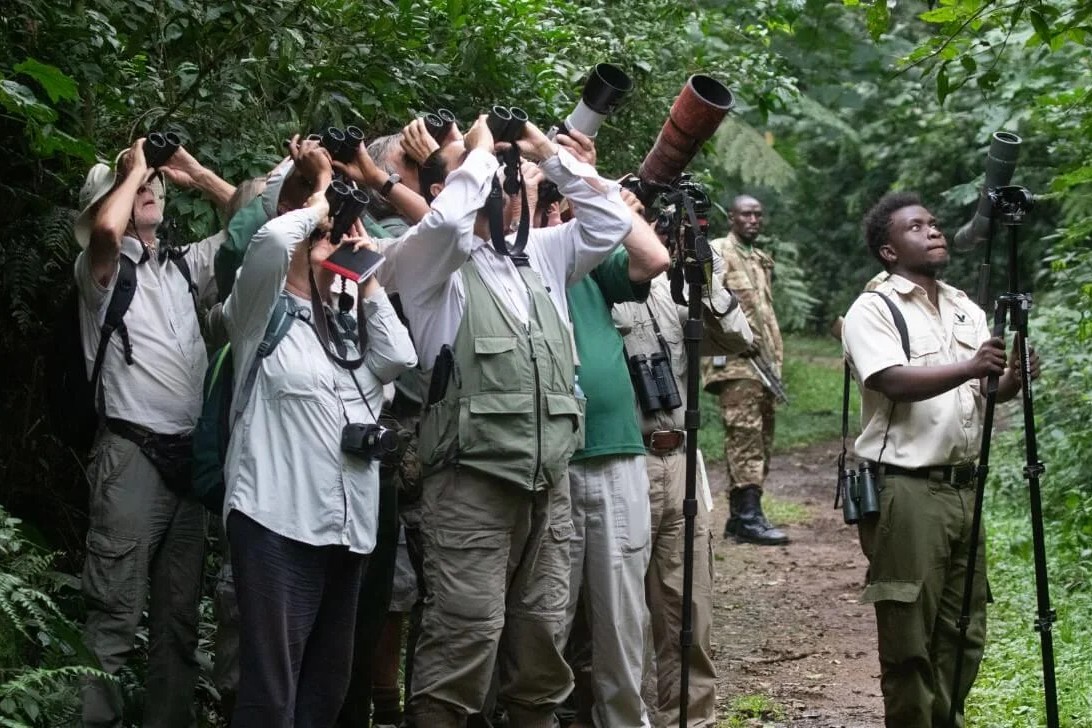
Best Time to Go Birdwatching for the Black Cuckoo in Uganda
Uganda is a year-round birdwatching destination, but the ease of finding a particular species such as the Black Cuckoo depends on local occurrence, calling activity, and detectability.
Dry seasons (June–August and December–February): These generally drier periods are convenient for combining birdwatching with wildlife viewing and travel between national parks. Road conditions are usually better, and visibility in many habitats is improved. Forest environments can still be damp, however, and local weather always varies.
Wet seasons (March–May and September–November): The wetter months can bring heavier rain and more challenging access in some areas, but they are often productive for bird activity overall. Many species remain active, and the lush vegetation supports abundant insect life.
The ideal timing ultimately depends on the specific habitats you plan to visit, your other target species, and the wider safari itinerary.
Best time of day: Early morning is generally the most productive period for birdwatching, as many birds are more active and vocal. For the Black Cuckoo, success also depends on local calling behaviour and recent activity. An experienced guide can adjust the search based on what is heard in the field and current conditions.
Why Birdwatch for the Black Cuckoo with Arcadia Safaris
Arcadia Safaris specialises in expertly guided birding experiences across Uganda’s top habitats. Our guides are skilled at locating both common and more elusive species, including secretive woodland birds such as the Black Cuckoo; We design flexible itineraries that maximise species diversity while remaining comfortable and enjoyable, whether you are a dedicated birder or a wildlife enthusiast wanting to expand your Uganda bird list.
At Arcadia Safaris, we organize customized safari experiences across Uganda, Rwanda, Kenya, and Tanzania. We can help you plan a journey that reflects your interests, travel dates, accommodation preferences, and budget. We can help you develop an itinerary that includes suitable birding destinations such as Kibale Forest National Park and Lake Mburo National Park, while allowing time to explore other habitats and wildlife attractions; Specific bird sightings cannot be guaranteed, but careful planning and knowledgeable local guiding can help you make the most of the opportunities available.
Remarks on the Black Cuckoo in Uganda
The Black Cuckoo is a distinctive and rewarding species for birdwatchers exploring Uganda’s woodlands and forest edges. Its glossy black plumage, brood-parasitic lifestyle, and characteristic call make every sighting memorable. By visiting the right habitats with an experienced guide and paying attention to vocalisations, visitors stand a good chance of adding this elegant cuckoo to their Uganda bird list while supporting the conservation of the country’s rich avian habitats.
Ready to Spot the Black Cuckoo in Uganda? Let Arcadia Safaris design a birdwatching or combined wildlife itinerary that includes the best woodland and forest-edge sites for species such as the Black Cuckoo. Contact us today for expert advice and a free quote. Email us at info@arcadiasafaris.com or via WhatsApp to start planning and book your Uganda birding safari with Arcadia Safaris today!