

Purple Heron in Uganda: Complete Guide to This Elegant Wetland Bird
The Purple Heron (Ardea purpurea) is one of the most elegant and distinctive herons found in Uganda’s wetlands. With its slender build, rich purplish-grey plumage, and patient hunting style, it is a favourite among birdwatchers exploring the country’s lakes, rivers, and papyrus swamps. Although more secretive than the common Grey Heron, the Purple Heron can be reliably observed in several key wetland habitats across Uganda. This complete guide covers its appearance, behaviour, preferred habitats, best places to see it, and conservation status. Arcadia Safaris designs specialised birding itineraries that include the best wetlands for species such as the Purple Heron.
Appearance and Identification
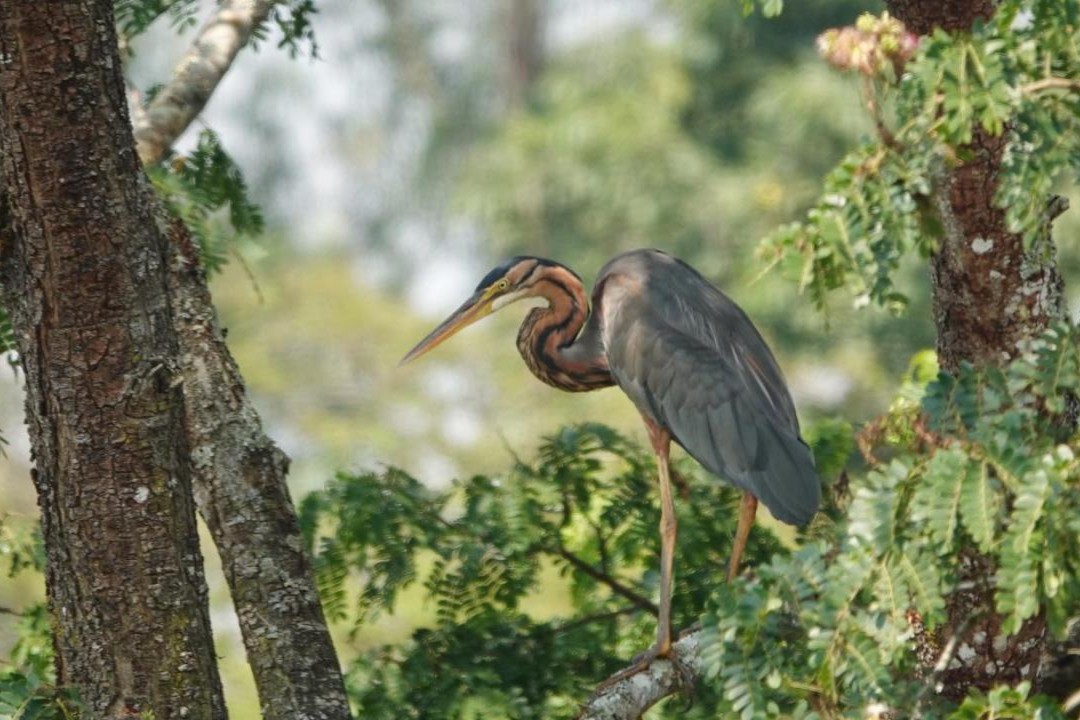
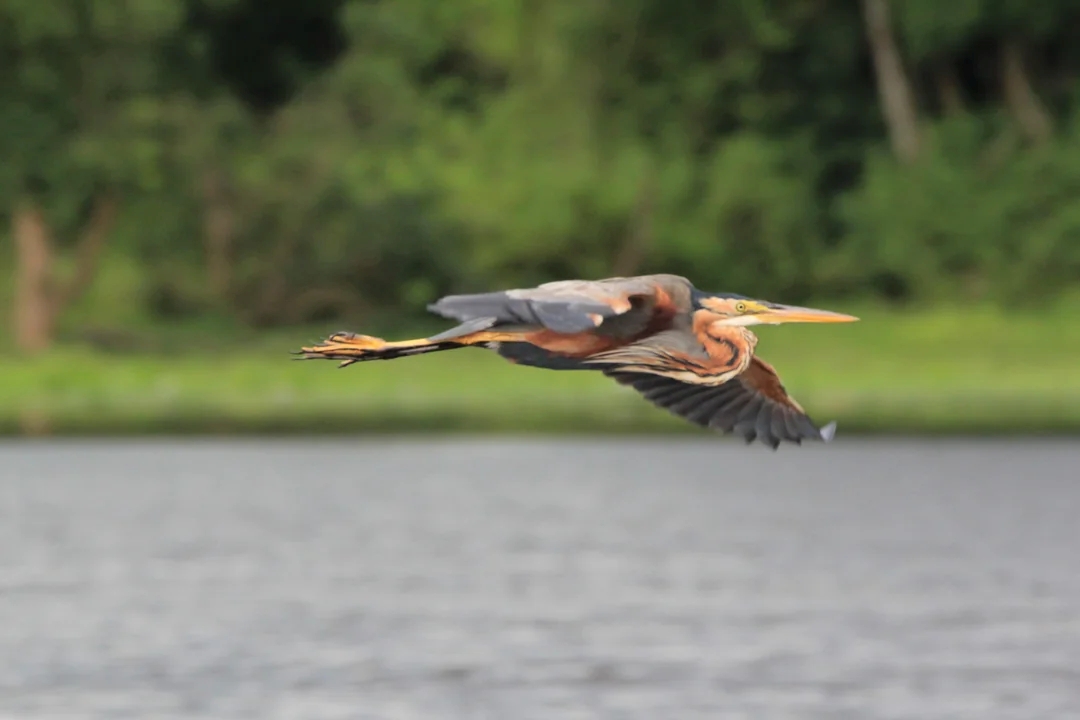
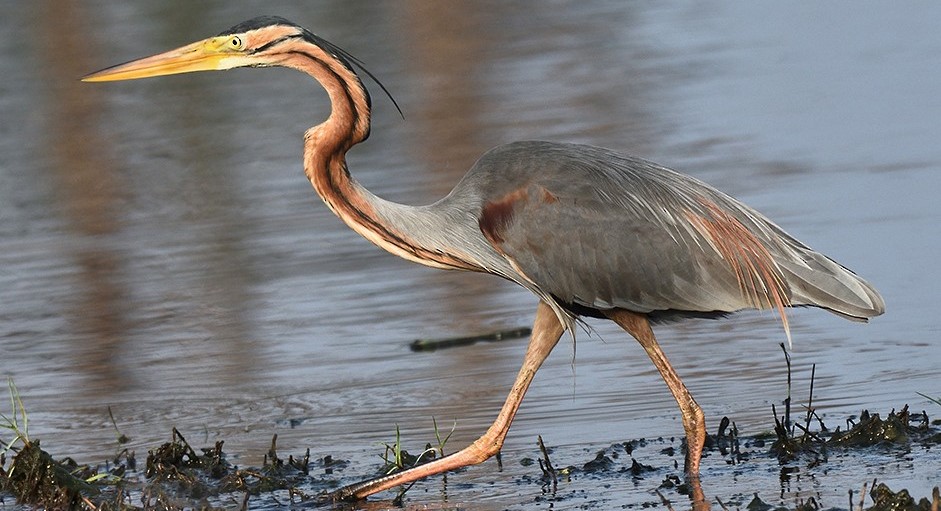
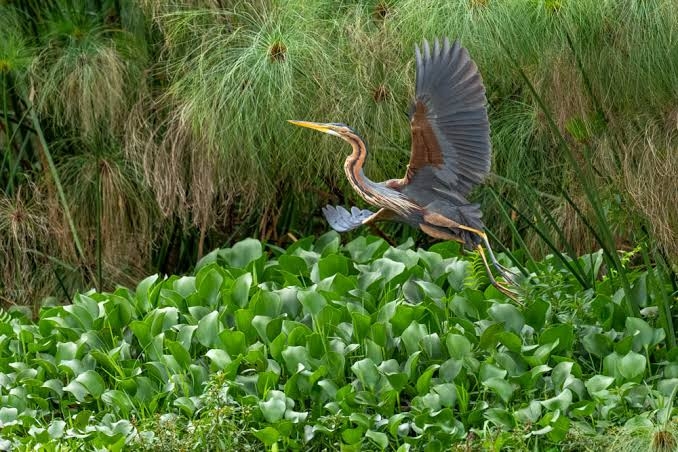
The Purple Heron is a medium-to-large heron, slightly smaller and more slender than the Grey Heron. Adults measure approximately 78–90 cm in length with a wingspan of 120–150 cm. The plumage is predominantly dark grey with rich purplish and chestnut tones on the neck and underparts, which become more pronounced in good light. It has a long, thin neck, a sharp yellowish bill, and dark legs. Juveniles are browner and lack the full adult colouration. In flight, the bird appears dark with long, trailing legs and a distinctive neck bulge.
Habitat and Distribution in Uganda
Purple Herons favour freshwater wetlands with dense vegetation, especially reedbeds, papyrus swamps, and the vegetated edges of lakes and rivers. In Uganda they are regularly recorded in:
Murchison Falls National Park — particularly along the River Nile and surrounding wetlands
Queen Elizabeth National Park — crater lakes and Kazinga Channel edges
Lake Victoria shoreline and associated swamps
Mabamba Swamp and other papyrus-dominated wetlands
They are generally more secretive than Grey Herons and often remain partially concealed in dense vegetation.
Behaviour and Feeding Habits
Purple Herons are skilled and patient hunters. They typically stand motionless in shallow water or move with slow, deliberate steps while searching for prey. Their diet consists mainly of fish, frogs, aquatic insects, crustaceans, and occasionally small mammals or birds. They strike with remarkable speed and accuracy, often swallowing prey whole.
The species is largely crepuscular (most active at dawn and dusk) but may also feed during the day. It is usually solitary or found in small numbers when foraging.
Breeding and Nesting of Ardea purpurea
During the breeding season, Purple Herons develop brighter plumage and more elaborate neck and breast feathers. Courtship involves distinctive displays, including stretching the neck and raising the crest. They nest in colonies or semi-colonially in dense reedbeds, papyrus, or trees near water. The nest is a platform of sticks and reeds. Both parents share incubation and chick-rearing duties.
Conservation Status in Uganda
The Purple Heron is listed as Least Concern on the IUCN Red List. It has a wide distribution across Africa, Europe, and Asia. However, like many wetland-dependent species, it is vulnerable to habitat loss, drainage of marshes, pollution, and disturbance. Protecting Uganda’s wetlands is essential for the continued presence of this and many other waterbirds.
Best Time for Spotting Purple Herons
Purple Herons can be observed year-round in Uganda’s suitable wetlands, as the local populations are largely resident. However, early morning and late afternoon provide the highest chances of good views, when the birds are most actively hunting.
During these cooler hours they are more likely to move out of dense cover and forage in more open shallow water, making them easier to locate and photograph. Overcast conditions can also be productive, as the birds remain active for longer periods.
Practical Tips for Spotting Purple Herons
1. Scan the edges of papyrus swamps, reedbeds, and vegetated lake or river margins carefully — Purple Herons often stand motionless and blend well with their surroundings.
2. Use binoculars or a spotting scope for better detection at longer distances.
3. Move slowly and quietly; sudden movements or loud noises will cause them to retreat into cover.
4. Join a guided boat trip on the Nile (Murchison Falls) or the Kazinga Channel (Queen Elizabeth National Park) for excellent elevated views of wetland edges.
5. Visit with an experienced bird guide who knows the preferred feeding spots and can recognise the species by silhouette and behaviour.
6. Combine wetland birding with other activities in the same parks to maximise your time in productive habitats.
Why Birding in Uganda with Arcadia Safaris
Arcadia Safaris specialises in expertly guided birding experiences across Uganda’s richest wetlands, forests, and national parks. Our professional bird guides have extensive knowledge of local habitats and the behaviour of both common and secretive species, including the Purple Heron.
We design flexible, well-paced itineraries that maximise species diversity and quality of views while remaining comfortable and enjoyable. Whether you are a dedicated birder seeking specific wetland specials or a wildlife enthusiast who wants to combine birdwatching with classic safari experiences, we tailor the trip to your interests and pace.
From the papyrus swamps of Mabamba and the Nile banks in Murchison Falls to the crater lakes of Queen Elizabeth and the forests of Kibale and Bwindi, Arcadia Safaris ensures you visit the most productive sites with the right timing and expert guidance. Our focus on responsible tourism also means your visit supports local communities and the conservation of Uganda’s important bird habitats.
Our Remarkable Uganda Birding Safaris
Below are some of the remarkable birding safaris offered by Arcadia Safaris. Kindly browse through and send your inquiry today for an ultimate birding experience; Birding Safaris in Uganda, Uganda Birdwatching Tours.
21 Days Birding Uganda and Gorilla Trekking Safari
18 Days Birding Tour with Gorilla Trekking
10 Day Birding Uganda and Game Drives
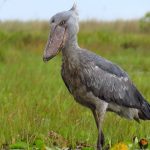
3 Day Mabamba Shoebill Birding Safari
Remarks on Purple Heron in Uganda
The Purple Heron is a graceful and understated highlight of Uganda’s rich avifauna. Its elegant appearance, specialised wetland lifestyle, and patient hunting behaviour make every sighting rewarding. By visiting key wetlands such as those in Murchison Falls National Park, Kibale Forest National Park, Queen Elizabeth National Park, and Mabamba Swamp, birdwatchers stand an excellent chance of encountering this beautiful heron while supporting the conservation of Uganda’s vital wetland ecosystems.
Ready to Spot the Purple Heron in Uganda? Let Arcadia Safaris design a birdwatching or combined wildlife itinerary that includes the best wetlands for Purple Herons and other waterbirds. Contact us via email at info@arcadiasafaris.com or via WhatsApp to start planning your Uganda birding trip today!