

The Great Egret in Uganda: Discovering the Graceful Giant of the Wetlands
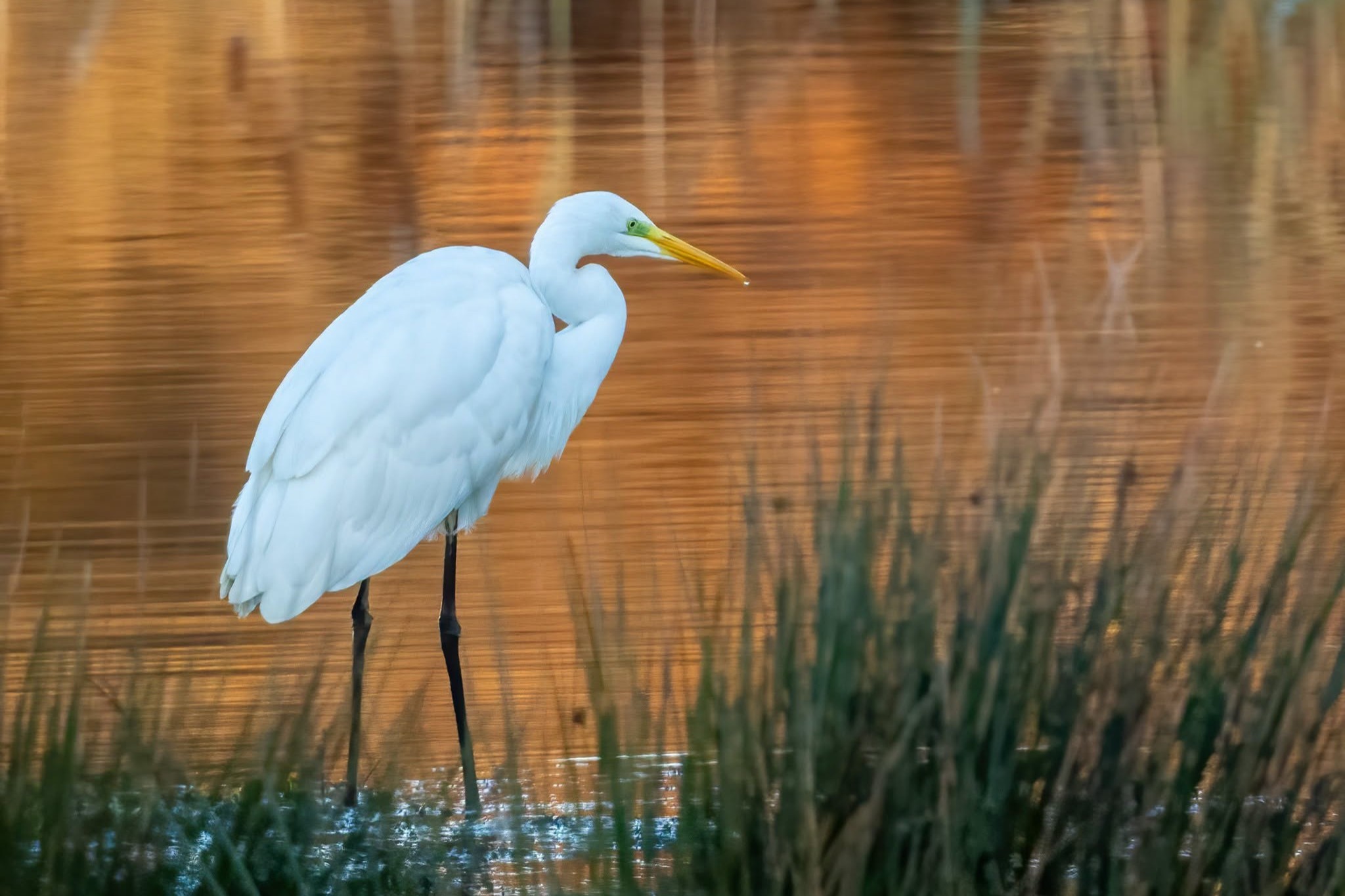
The Great Egret (Ardea alba), also known as the Great White Egret, is one of the most elegant waterbirds you can encounter in Uganda. Its immaculate white plumage, long slender neck, pointed bill and graceful movements make it a striking sight along lakeshores, riverbanks, marshes and other wetland habitats. Whether it stands motionless in shallow water or glides slowly across the sky with its long legs trailing behind, this magnificent bird captures the attention of birdwatchers, nature photographers and wildlife enthusiasts.
Uganda’s diverse natural landscapes provide important habitats for the Great Egret and many other waterbirds. From the shores of Lake Victoria to the wetlands of Murchison Falls National Park and the Kazinga Channel in Queen Elizabeth National Park, the country’s lakes, rivers and marshes offer opportunities to observe this beautiful species in its natural environment. For visitors interested in birdwatching in Uganda, the Great Egret is a rewarding species to look for during wetland excursions and wildlife safaris. Beyond its beauty, it also plays an important role in aquatic food chains and reminds us why healthy wetlands matter to wildlife and local communities.
Physical Characteristics and Identification of the Great Egret
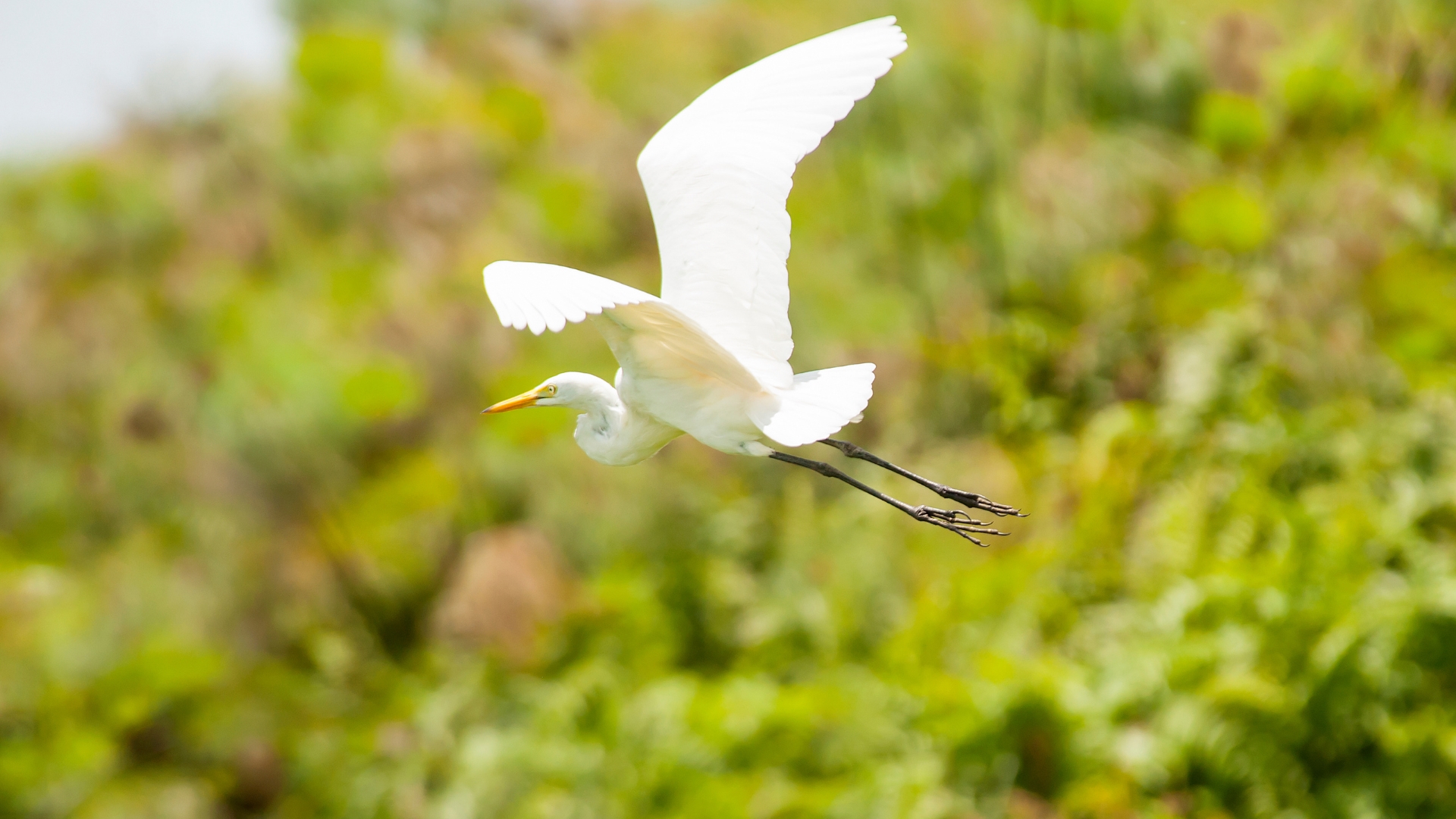
The Great White Egret is a large, slender member of the heron family, Ardeidae. Adults generally measure around 85–100 centimetres in length, with a wingspan that can reach approximately 1.5 metres or more. Its entire body appears white, while its long neck, pointed bill and dark legs give it a distinctive silhouette. Outside the breeding season, the African subspecies generally displays a yellow bill, dark legs and feet, and pale yellow eyes. Its size and elegant proportions distinguish it from several smaller white egrets found in Uganda.
During the breeding season, the Great Egret also known as Great White Egret (Ardea alba) develops striking ornamental feathers known as aigrettes. These delicate plumes grow from the bird’s upper back and extend beyond its tail, creating an elegant appearance during courtship displays. The African subspecies also develops a black bill, while the bare skin around its eyes becomes a vivid greenish colour. Males and females look very similar, although males are generally slightly larger. When observing the bird in flight, look for its long neck folded into an S-shape and its legs extending well beyond the tail, a characteristic flight posture shared with other herons.
Habitat of the Great Egret in Uganda
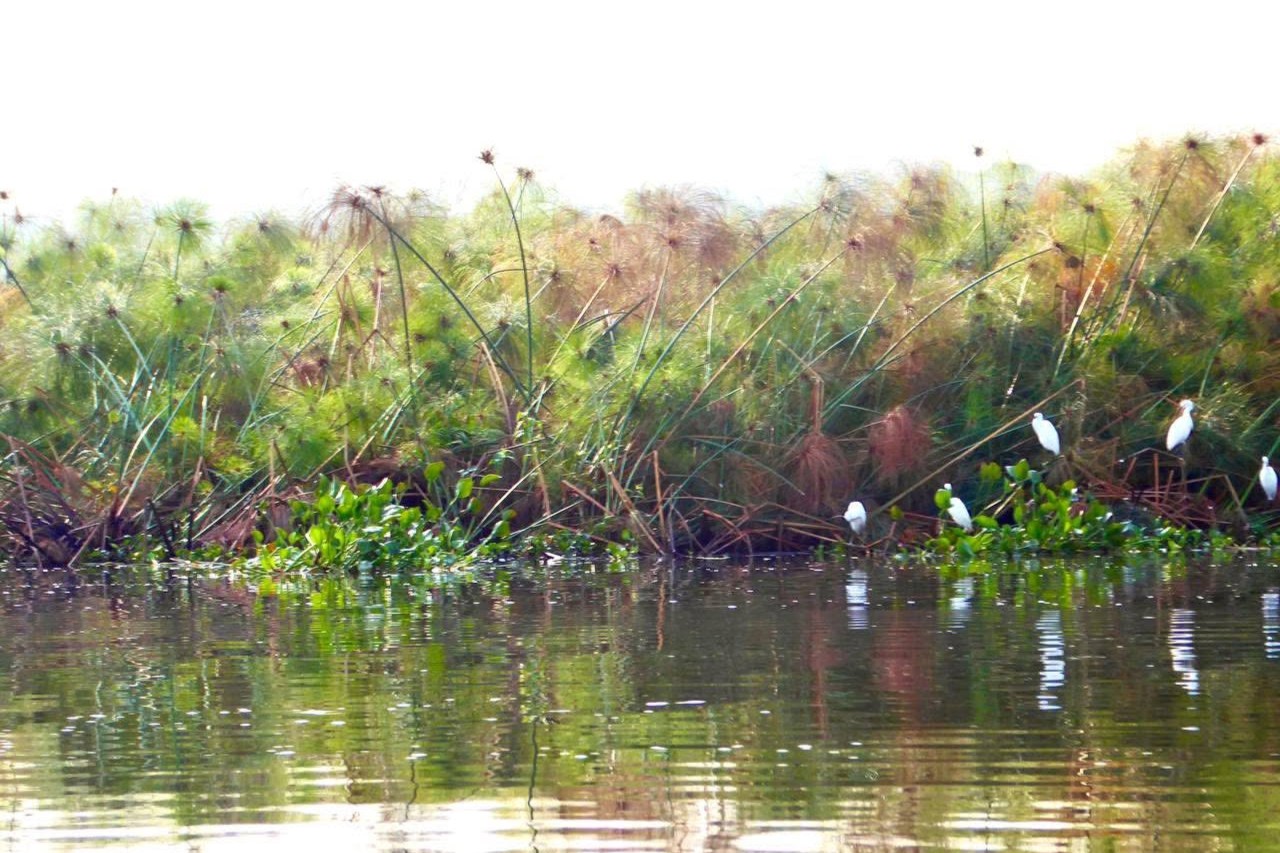
Uganda’s wetlands provide suitable feeding and resting environments for the Great White Egret. The species favours shallow freshwater habitats where it can search for fish and other aquatic prey, although it also uses riverbanks, flooded grasslands, marshes, lakeshores and suitable coastal habitats. These environments offer shallow feeding grounds, vegetation for shelter and access to the small animals that form its diet. The Great Egret may forage alone or gather with other waterbirds where food is abundant, often standing patiently in shallow water before striking quickly at passing prey.
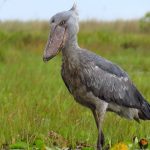
Several locations in Uganda offer rewarding opportunities to observe the Great Egret. The Kazinga Channel in Queen Elizabeth National Park, the Nile River and surrounding wetlands in Murchison Falls National Park, Lake Mburo and the Lake Victoria wetland system are among the areas where birdwatchers have recorded the species. Mabamba Wetland, famous for its Shoebill, also supports a rich variety of wetland birds and offers an interesting setting for birdwatching excursions. Sightings depend on local conditions and bird movements, but these habitats provide excellent opportunities to explore Uganda’s aquatic birdlife.
Feeding Habits and Behaviour of the Great Egret
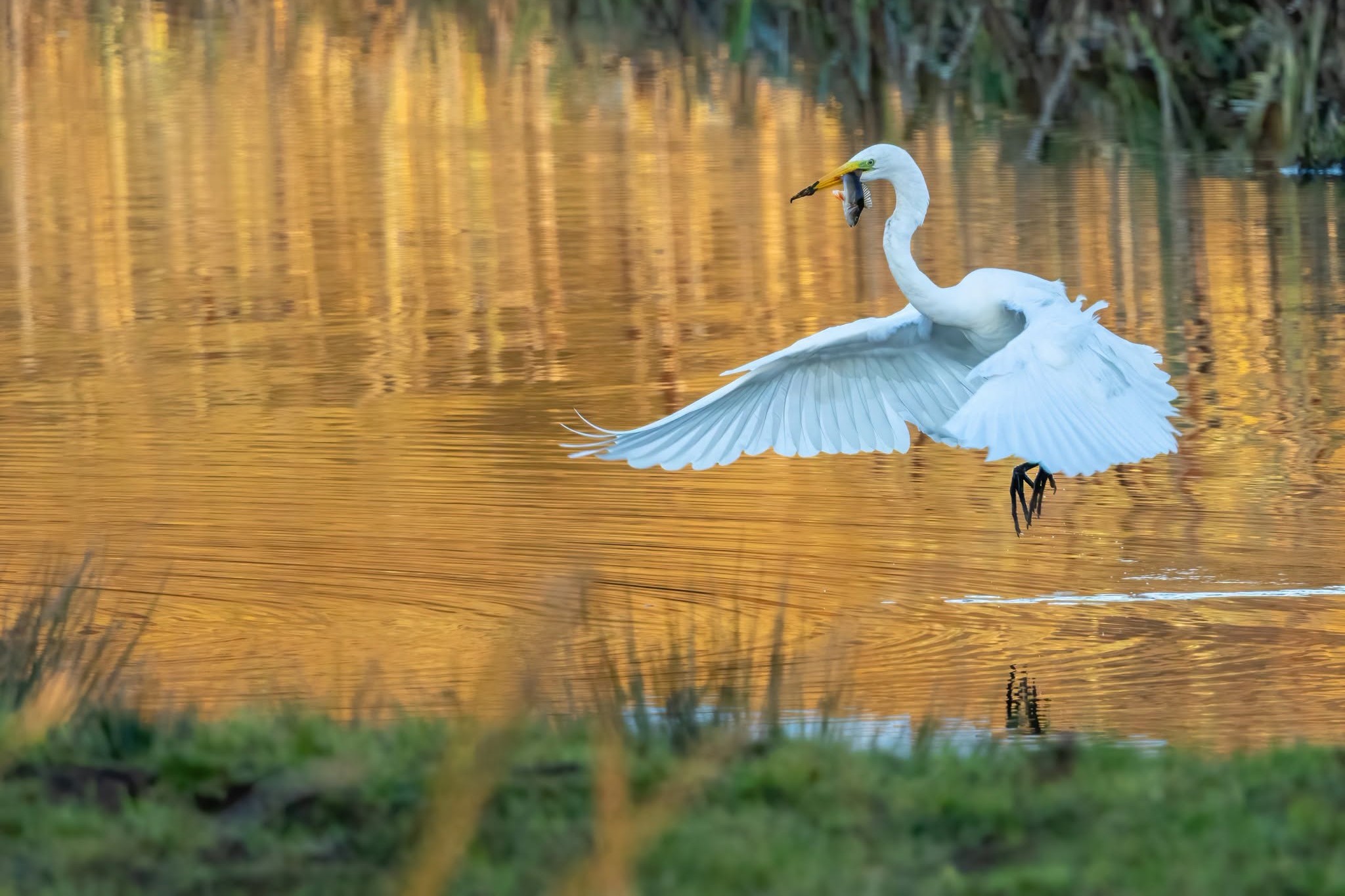
The Great Egret is a skilled predator that uses patience and precision to catch its food. It commonly feeds in shallow water, where it either stands motionless or moves slowly through the shallows while watching for prey. Once it spots a suitable target, it thrusts its long, pointed bill forward with remarkable speed. Its diet includes fish, frogs, aquatic insects, crustaceans, small reptiles and other small animals that live in or around wetlands. This flexible feeding behaviour allows the bird to use different wetland habitats and take advantage of available food.
Although the Great Egret often feeds alone, several individuals may gather in productive feeding areas where food is plentiful. It may also share wetland habitats with other herons, egrets, storks, ibises and waterbirds. Its movements can appear slow and deliberate, but the bird reacts quickly when it detects prey or senses danger. During flight, it maintains a graceful posture, folding its neck close to its body and extending its long legs behind it. These distinctive movements make the Great Egret particularly rewarding to observe and photograph.
Breeding and Courtship Displays
The breeding season brings noticeable changes to the Great Egret’s appearance and behaviour. Adults develop their ornamental back plumes, which play an important role in courtship displays. The bare skin around the eyes also becomes more colourful, while the bill of the African subspecies turns black for a period during breeding. Males use visual displays and body movements to attract females and establish breeding territories. These changes make breeding birds particularly striking, although the exact timing of breeding varies with location and environmental conditions.
Great White Egrets commonly nest in colonies, sometimes alongside other herons and waterbirds. They usually build their nests in trees, shrubs or dense vegetation close to suitable feeding habitats. Both parents participate in incubation and care for the young, bringing food to the nest until the chicks develop enough to leave. Suitable nesting sites, undisturbed vegetation and reliable feeding areas therefore play an important role in successful breeding. Protecting wetland and nesting habitats helps support the species and other birds that depend on the same environments.
Ecological Importance of the Great Egret
The Great Egret contributes to the natural balance of wetland ecosystems through its feeding activities. As a predator, it helps regulate populations of fish, amphibians, aquatic insects and other small animals. It also forms part of the wider food web, interacting with other predators and competing with other waterbirds for available resources. Its presence reflects the availability of suitable feeding and resting habitats, although seeing a Great White Egret alone does not provide a complete measure of wetland health.
Healthy wetlands support far more than waterbirds. They provide breeding and feeding grounds for fish, shelter for amphibians and reptiles, and habitats for numerous insects and plant species. They also help filter water, regulate floods and sustain livelihoods through fishing and other natural resources. Uganda’s wetlands therefore have ecological, economic and social importance that extends well beyond their value as birdwatching destinations. Protecting these environments benefits the Great Egret while supporting the many species and communities that depend on them.
Conservation Status and Threats Facing the Great Egret
The Great Egret has a global conservation status of Least Concern as per IUCN, reflecting its broad distribution and overall population status. However, this classification does not remove the need to protect the habitats on which individual populations depend. Wetland drainage, agricultural expansion, urban development, pollution and unsustainable resource use can reduce the availability and quality of suitable feeding and nesting areas. Changes in water levels and disturbance around breeding sites can also affect the conditions that waterbirds need to survive.
Uganda’s wetlands face many of these pressures. Expanding settlements, agricultural activities, industrial development and pollution place increasing demands on wetland environments, while the loss of natural vegetation can reduce suitable habitats for birds and other wildlife. The Great Egret may be less vulnerable globally than some threatened wetland species, but its continued presence in Uganda still depends on healthy aquatic ecosystems. Conservation efforts should therefore protect natural wetlands, restore degraded habitats, reduce pollution and encourage communities to use wetland resources sustainably.
Where to See the Great Egret in Uganda
Birdwatchers can look for the Great White Egret in several parts of Uganda, particularly around lakes, rivers and marshes. Some of the country’s most rewarding birding destinations also support many other waterbirds, making them worthwhile stops on a wider Uganda birding safari.
Queen Elizabeth National Park: The Kazinga Channel and its surrounding wetlands provide excellent opportunities to observe waterbirds, including Great Egrets, herons, cormorants and other aquatic species. A boat cruise along the channel offers a particularly rewarding way to explore the birdlife.
Murchison Falls National Park: The Nile River, riverbanks and surrounding wetlands support a variety of waterbirds. Visitors can look for Great Egrets during boat excursions and other birdwatching activities along the river.
Lake Mburo National Park: The park’s lakes, marshes and wetland edges provide habitats for several waterbird species. Great White Egrets have also featured in birding records from this area.
Mabamba Wetland: Located along Lake Victoria, Mabamba is internationally recognised for its Shoebill excursions and rich wetland birdlife. Visitors can combine the search for the Shoebill with observations of other waterbirds.
Lake Victoria wetlands: Several wetland areas along the lake provide feeding and resting habitats for egrets and other waterbirds. Birdwatching opportunities vary according to the location and season.
These destinations offer different birdwatching experiences, from boat excursions along major waterways to quiet observations around marshes and lakeshores. A knowledgeable local bird guide can help identify the Great Egret and distinguish it from similar-looking species. Sightings are never guaranteed, but exploring several wetland habitats increases the range of birds you may encounter.
How to Identify the Great Egret Among Other White Birds
Uganda is home to several white or predominantly white waterbirds, and distinguishing them can be an interesting part of a birdwatching excursion. The Great Egret is particularly notable for its large size, long neck, pointed bill and dark legs. Its folded S-shaped neck during flight also helps separate it from birds such as storks and ibises, which extend their necks while flying. Observing the bird’s size, bill shape, leg colour and feeding behaviour can help you identify it more confidently.
The Little Egret (Egretta garzetta), for example, is considerably smaller and usually has a black bill with bright yellow feet. The Intermediate Egret (Ardea intermedia) is closer in appearance but smaller and has different proportions. The Western Cattle Egret (Bubulcus ibis) is more compact, with a shorter neck and legs, and often feeds in grasslands around grazing animals rather than wading in deeper shallows. Learning these differences makes birdwatching in Uganda more rewarding, especially when several species share the same wetland.
Responsible Birdwatching and Human Interaction
Responsible birdwatching helps protect the Great White Egret and other wetland species from unnecessary disturbance. Visitors should observe birds from a respectful distance, avoid approaching nests and refrain from making loud noises or sudden movements. Photographers should never chase birds or disturb them simply to obtain a closer image. During breeding periods, extra care is important because repeated disturbance can interrupt courtship, nesting and the feeding of young birds. Guided birdwatching excursions also help visitors understand local conservation guidelines and enjoy wildlife without damaging its habitat.
Local communitiesplay an important role in wetland conservation because many people depend on these environments for fishing, agriculture and other resources. Conservation programmes become more effective when they involve communities, support sustainable livelihoods and explain the long-term benefits of healthy wetlands. Birdwatching tourism can also contribute by creating opportunities for local guides, boat operators and other service providers. When visitors choose responsible operators and respect local guidance, they help support nature-based tourism while encouraging the protection of Uganda’s valuable wetland ecosystems.
Discover the Great Egret and Uganda’s Birdlife with Arcadia Safaris
The Great White Egret is a beautiful example of the remarkable birdlife that thrives in Uganda’s wetlands. Its graceful appearance, patient hunting behaviour and distinctive breeding plumage make it a fascinating species for birdwatchers and nature lovers. From the shores of Lake Victoria to the Nile River and the Kazinga Channel, Uganda offers several rewarding locations to explore wetland habitats and observe a variety of waterbirds.
At Arcadia Safaris, we organise tailor-made Uganda birdwatching tours and wildlife safaris that introduce visitors to the country’s remarkable natural diversity. Whether you want to explore Mabamba Wetland in search of the Shoebill, enjoy a boat trip along the Kazinga Channel, discover the birdlife of Murchison Falls National Park or combine birdwatching with gorilla and chimpanzee tracking, we can help plan an experience around your interests and travel schedule. Our team can arrange private transport, experienced birding guides and suitable accommodation for your journey.
Contact Arcadia Safaris at info@arcadiasafaris.com or via WhatsApp today to plan your Uganda birdwatching safari and discover the country’s beautiful wetlands and extraordinary birdlife.