
African Firefinch in Uganda: Identification, Habitat and Where to See This Beautiful Bird
Uganda is one of Africa’s outstanding birdwatching destinations, with an impressive variety of bird species found across its national parks, forests, wetlands, grasslands and woodland habitats. Among the smaller but particularly attractive birds that visitors can encounter is the African Firefinch, a colourful member of the finch family recognised for its deep reddish plumage, brown upperparts and distinctive blue-grey bill. Although it is not as large or conspicuous as some of Uganda’s famous birds, its attractive appearance and relatively secretive behaviour make it an interesting species to look for during a Uganda birding safari.
Ornithologists know the African Firefinch as Lagonosticta rubricata. This small passerine bird occurs across several regions of sub-Saharan Africa, including Uganda. It belongs to the Estrildidae family and stands out as a true gem in the avian world. It typically inhabits dense vegetation, woodland edges, grassy thickets, scrubland and well-covered areas near streams. The bird often feeds close to the ground while searching for small grass seeds among vegetation, and birdwatchers may encounter it in pairs or small groups. In Uganda, birding records include sightings from Lake Mburo National Park, Murchison Falls National Park, Queen Elizabeth National Park and the Budongo Forest region. Whether you are an experienced birder, a wildlife photographer or a traveller interested in discovering Uganda’s smaller bird species, the African Firefinch rewards your birdwatching checklist.
What Is the African Firefinch?
The African Firefinch (Lagonosticta rubricata) belongs to the family Estrildidae, a group of small passerine birds that includes waxbills, mannikins and other finches. It is also known by alternative names such as the Dark Firefinch and Blue-billed Firefinch, referring to its darker reddish appearance and characteristic bill colour. Measuring approximately 10–11 centimetres in length, it is a relatively small bird, but its attractive plumage makes it distinctive when seen clearly. Its natural distribution extends across several parts of sub-Saharan Africa, where it occupies suitable grassland, scrub, woodland and forest-edge habitats.
The African Firefinch is generally a resident species rather than a long-distance migratory bird, meaning it can be encountered in Uganda throughout the year. It usually keeps close to vegetation, where it searches for food and finds protection from predators. Although males are more brightly coloured and can be easier to recognise, females and juvenile birds are generally duller. Its preference for thick cover means that birdwatchers may hear its calls or catch a brief glimpse before obtaining a clear view. Patience and careful observation are therefore important when searching for this attractive finch.
How to Identify the African Firefinch
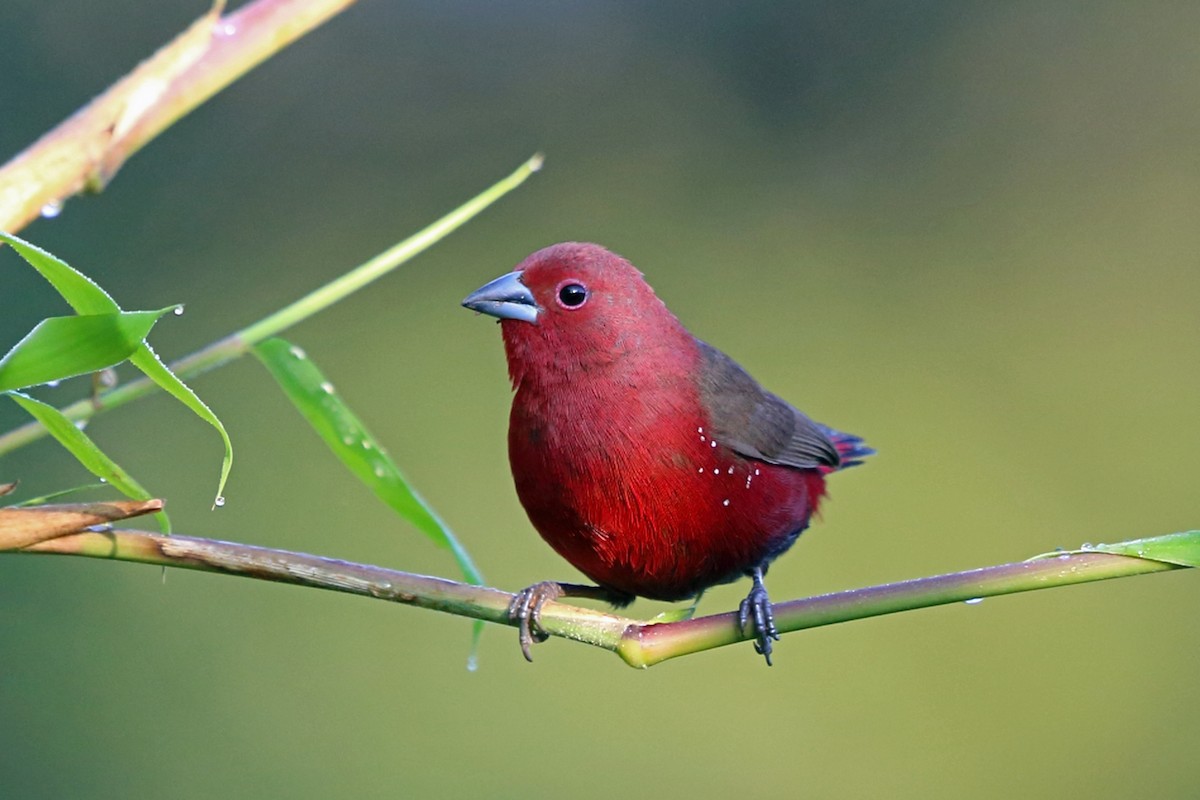
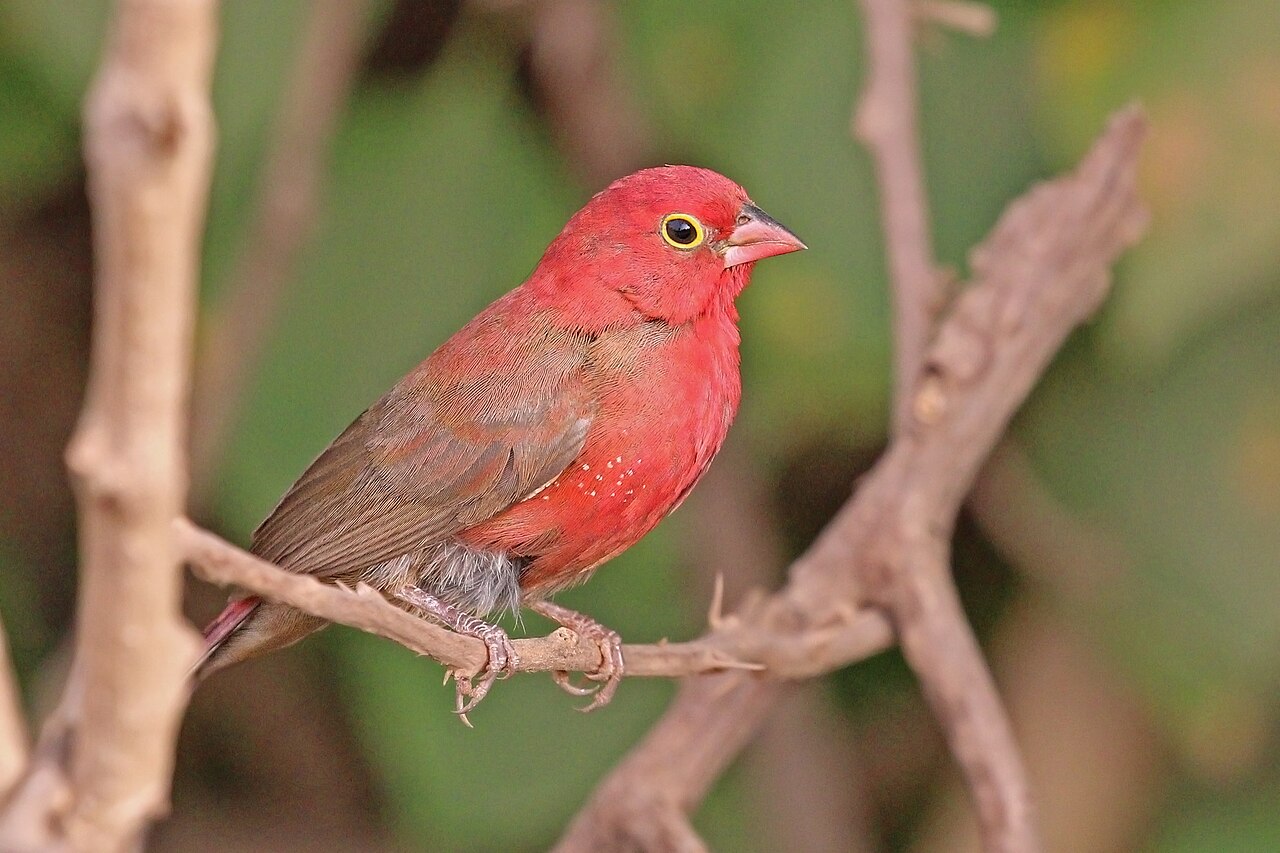
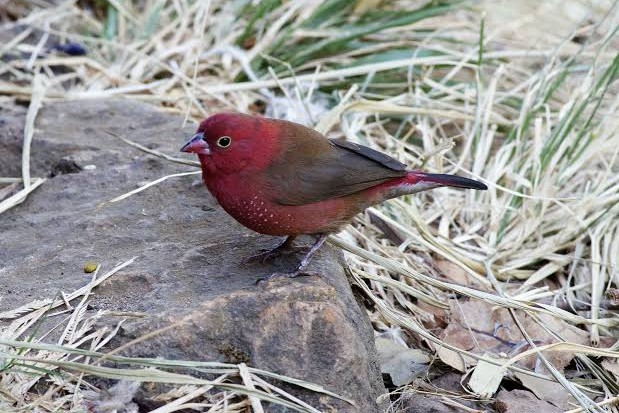
The male African Firefinch is particularly attractive, with deep crimson or wine-red underparts, a red rump, brown wings and back, and a greyish crown and nape. Its bill is blue-grey to slate-coloured, providing an important identification feature when distinguishing it from other firefinches. Small white spots may also be visible along the sides of the breast and flanks. The contrast between the reddish underparts and brown upperparts gives the adult male a distinctive appearance, particularly when observed in good natural light.
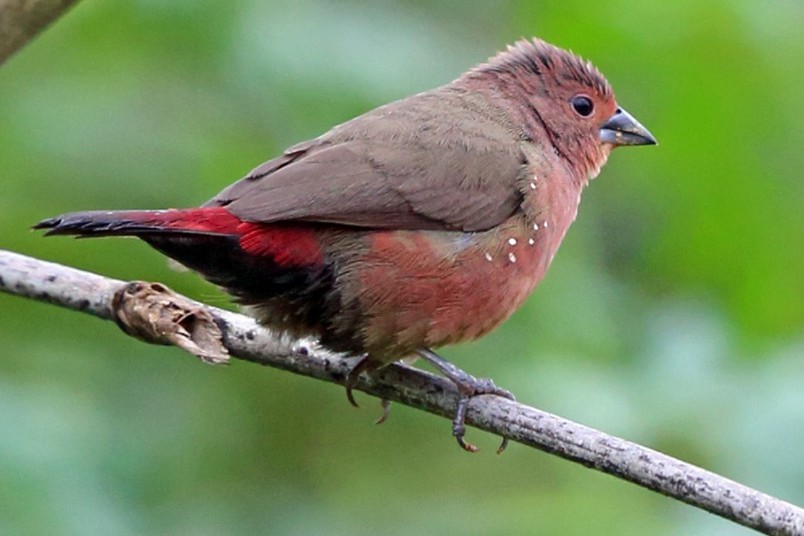
The female is generally less brightly coloured, with paler reddish or brownish plumage and less intense colouring on the underparts. Juvenile birds are usually much duller and predominantly brown, with some developing reddish features as they mature. Because several firefinch species share similar body shapes and reddish plumage, birdwatchers should consider the bill colour, rump, crown, underparts and habitat when identifying the African Firefinch. Observing the bird carefully rather than relying on its overall red appearance alone will help reduce confusion with other members of the genus Lagonosticta.
Difference Between African Firefinch and Other Firefinches in Uganda
Uganda is home to several firefinch species, making careful identification important for birdwatchers. The African Firefinch can be confused with the Red-billed Firefinch, Jameson’s Firefinch and Black-bellied Firefinch, particularly when the birds are moving quickly through vegetation.
The Red-billed Firefinch (Lagonosticta senegala) is one of the more familiar firefinches in Uganda. As its name suggests, it has a distinctive reddish or pinkish bill, which helps separate it from the African Firefinch’s blue-grey bill. Male Red-billed Firefinches also show extensive red colouring across the head and upperparts.
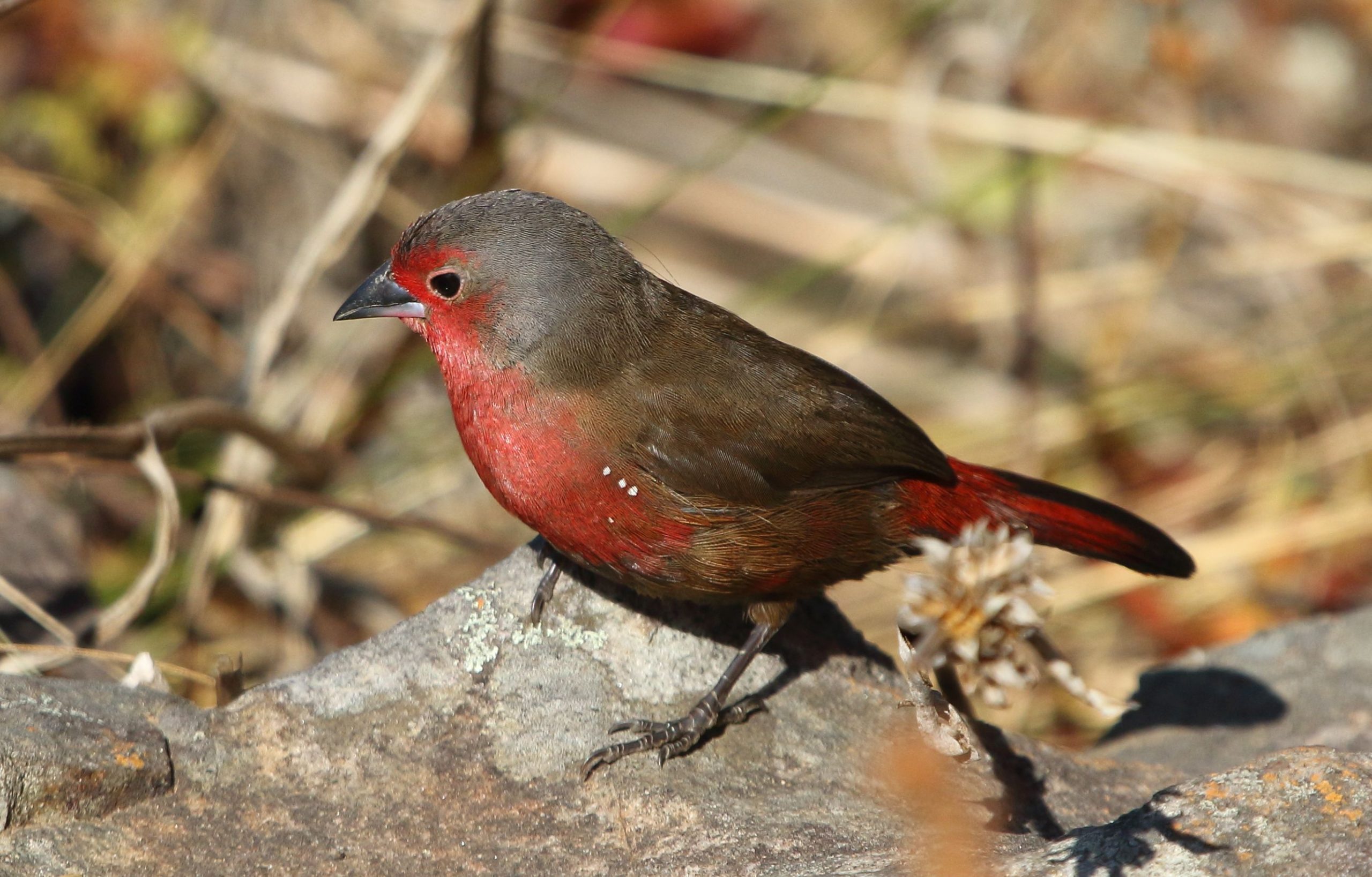
Jameson’s Firefinch (Lagonosticta rhodopareia) is another species that may cause confusion. It generally has a rosier or pinker appearance, including a pinkish wash over the crown and back. The African Firefinch typically has a deeper crimson underside and browner upperparts.
The Black-bellied Firefinch (Lagonosticta rara) is another species recorded in Uganda. It has its own distinctive plumage pattern, with darker underparts that help distinguish it from other members of the genus.
Where to See African Firefinch in Uganda
Uganda offers several rewarding birdwatching destinations where visitors can search for the African Firefinch. Birdwatchers have recorded the species in different parts of the country, particularly in areas with suitable grassland, woodland and scrub habitats. Lake Mburo National Park, Murchison Falls National Park, Queen Elizabeth National Park and the Budongo Forest region make useful locations to consider when planning a birding excursion. Although no one can guarantee sightings, these destinations provide opportunities to explore different habitats while searching for the African Firefinch and many other fascinating bird species.
1. Lake Mburo National Park
Lake Mburo National Park ranks among Uganda’s most rewarding destinations for birdwatching. It combines open savannah, acacia woodland, rocky outcrops, wetlands and lakes. The park lies in western Uganda, between Kampala and the southwestern safari circuit, and supports a rich variety of bird species alongside zebras, impalas, elands, buffaloes and other wildlife. Bird checklists for Lake Mburo include the African Firefinch, making it an interesting species for visitors who explore the park’s wooded and grassy habitats. Birdwatchers should pay particular attention to bushy areas, woodland edges and patches of thick vegetation where small seed-eating birds forage close to the ground.
Visitors can combine birdwatching in Lake Mburo with game drives, guided nature walks and boat excursions on the lake, so they enjoy both the park’s wildlife and its diverse birdlife. Other notable species to look out for include the African finfoot, papyrus gonolek, saddle-billed stork, African fish eagle, kingfishers and various herons. The park offers particular convenience for travellers who combine birdwatching with a wider Uganda wildlife safari, since they can include it on journeys between Kampala, Bwindi Impenetrable National Park and Queen Elizabeth National Park. This makes Lake Mburo a useful stop for visitors who want to explore several of Uganda’s birding habitats within one itinerary.
2. Murchison Falls National Park
Murchison Falls National Park is one of Uganda’s most famous wildlife destinations and an excellent location for exploring the country’s diverse birdlife. The park features extensive savannah plains, riverine woodland, forest patches and wetland habitats, creating opportunities to encounter numerous bird species. African Firefinch has been recorded in the wider Murchison Falls region, and birdwatchers can search for it around suitable bushy vegetation, grassy habitats and woodland edges. Its small size and preference for cover mean that careful observation is important, especially when exploring areas where several other finches and seed-eating birds occur.
The park is also famous for its spectacular waterfall, where the Nile forces its way through a narrow gorge before plunging downstream. Visitors can combine birdwatching with game drives, boat cruises on the Nile, nature experiences and a visit to the top of the falls. Other notable birds found in the park include the Abyssinian ground hornbill, secretary bird, Goliath heron, African fish eagle, saddle-billed stork and various bee-eaters, rollers and kingfishers. A visit to Murchison Falls is particularly rewarding for travellers who want to combine birdwatching with a traditional African wildlife safari, offering an opportunity to explore different habitats while enjoying some of Uganda’s most spectacular scenery.
3. Budongo Forest and the Royal Mile
The Budongo Forest region is another interesting birdwatching destination in western Uganda. Located near Murchison Falls National Park, Budongo is one of the country’s important tropical forests, supporting a rich diversity of forest and woodland bird species. African Firefinch has been recorded in the wider Budongo area, including locations around Busingiro and Nyabyeya. Birdwatchers searching for the species should pay attention to suitable vegetation along forest edges, clearings, cultivated areas and bushy sections where small birds may forage. The Royal Mile, in particular, is one of Uganda’s best-known birdwatching routes and attracts birders interested in exploring the region’s rich avian diversity.
Budongo is also famous for its chimpanzee population and offers opportunities to combine birdwatching with primate experiences. Visitors exploring the forest may encounter species such as the chocolate-backed kingfisher, African dwarf kingfisher, Ituri batis and other forest-associated birds, depending on the location and season. A birding visit to Budongo can be combined with chimpanzee tracking and a Murchison Falls safari, making it an excellent destination for travellers interested in both primates and birdlife. The forest’s different habitats also provide an interesting contrast to the open savannah and wetland environments found elsewhere in northern Uganda.
4. Queen Elizabeth National Park
Queen Elizabeth National Park is another important destination to consider when planning a Uganda birding safari. Located in western Uganda, the park features savannah grasslands, crater lakes, wetlands, riverine vegetation and woodland habitats that support a remarkable diversity of birds. African Firefinch has been recorded in Queen Elizabeth National Park, making the area worth exploring for birdwatchers interested in spotting this species. Visitors should pay attention to suitable bushy areas, grassland edges and patches of natural vegetation, particularly where small seed-eating birds are likely to forage.
The park offers much more than birdwatching, with opportunities for game drives, boat cruises along the Kazinga Channel and wildlife viewing in the Kasenyi plains and Ishasha sector. Visitors may encounter elephants, buffaloes, lions, Uganda kob, hippos and numerous other animals while exploring the park. Its birdlife includes African fish eagles, saddle-billed storks, martial eagles, flamingos in suitable crater-lake conditions, kingfishers, bee-eaters and many other species. Queen Elizabeth is therefore an excellent addition to a longer birding itinerary, particularly for visitors who want to combine smaller bird species with classic African wildlife experiences.
Habitat and Natural Environment of the African Firefinch
The African Firefinch is generally associated with habitats that provide sufficient vegetation cover, food and suitable nesting locations. It occurs in woodland, savannah, scrubland, forest edges, grassland and other semi-open environments. Unlike some bird species that prefer exposed grassland or open water, the African Firefinch often stays close to bushes, tall grass and dense vegetation, which provide protection from predators while offering suitable feeding and nesting areas. Its preference for these habitats means that it is often easier to locate around thick vegetation than in completely open landscapes.
In Uganda, visitors searching for the African Firefinch should pay attention to bushy woodland edges, grassy clearings, scrubland and areas with thick vegetation near watercourses. The bird may occasionally emerge into more open spaces to feed before quickly returning to cover. Its ability to occupy different habitat types contributes to its broad distribution across sub-Saharan Africa, although the availability of suitable vegetation remains important for its feeding, shelter and breeding activities. Maintaining healthy natural vegetation around woodland and grassland habitats is therefore valuable for supporting the African Firefinch and other small birds.
What Does the African Firefinch Eat?
The African Firefinch is primarily a seed-eating bird, feeding on small grass seeds and other plant seeds that it gathers from the ground or among low vegetation. It commonly searches for food in grassy areas, scrubland and woodland edges, often remaining close to bushes where it can quickly retreat when disturbed. Its short, strong bill handles small seeds efficiently, allowing the bird to feed well in habitats where grass and other seed-producing plants grow. Birdwatchers may observe it moving quietly through vegetation or searching the ground in pairs and small groups.
Small insects and other invertebrates may also form part of its diet, providing additional nutrients and protein. This can be particularly important during breeding periods when adults have increased nutritional demands and young birds require suitable food. Its feeding behaviour is similar to that of several other estrildid finches, which often forage close to the ground and use their strong bills to handle small seeds. For birdwatchers, observing the African Firefinch feeding can provide useful opportunities to study its behaviour and identify its distinctive plumage.
Behaviour and Calls of the African Firefinch
The African Firefinch is generally a quiet and relatively secretive bird, often encountered in pairs or small groups moving through dense vegetation while searching for food. Although the male’s reddish plumage can make it noticeable, its preference for thick cover means that it may remain hidden for long periods. When feeding, it often moves close to the ground, occasionally emerging into open patches before returning to nearby bushes. If disturbed, it may quickly fly low towards thicker vegetation, making it difficult to follow without patience and careful observation.
Its calls can be useful for locating individuals that are difficult to see. Birdwatchers may hear soft, short vocalisations coming from shrubs and grassy vegetation, helping them identify the bird’s general location before attempting to obtain a clear view. Remaining quiet and observing the surrounding vegetation can improve the chances of seeing the bird naturally. An experienced birding guide can also help distinguish its calls from those of other small finches and waxbills that share the same habitats.
Breeding and Nesting of the African Firefinch
The African Firefinch builds a nest using grass fibres, plant materials and other vegetation available within its habitat. Its nest is generally rounded or dome-shaped, with a side entrance, and is usually placed in a bush or another well-covered location. The choice of a sheltered nesting site helps protect the eggs and young from predators and excessive disturbance. Dense vegetation therefore plays an important role not only in providing feeding areas but also in supporting the bird’s reproductive activities.
The female lays eggs in the nest, and the parents participate in caring for the young. Like other small seed-eating birds, the African Firefinch benefits from habitats that retain suitable bushes, grasses and natural vegetation throughout the breeding period. Clearing dense vegetation, removing nesting cover or disturbing active nests can affect local breeding opportunities. Protecting natural scrubland and woodland edges is consequently important for maintaining suitable nesting environments for the species.
Conservation Status of the African Firefinch
The African Firefinch is currently classified as Least Concern on the IUCN Red List, indicating that it is not presently considered globally threatened under the available assessment. Its broad distribution across sub-Saharan Africa and ability to occupy several habitat types contribute to this conservation classification. However, a global conservation category does not mean that every local population is free from threats. Changes to natural vegetation and the degradation of suitable feeding and nesting habitats can affect bird populations in particular areas.
Agricultural expansion, uncontrolled burning, vegetation clearance and the degradation of woodland and scrub habitats can reduce the quality of environments used by small birds. Protecting natural vegetation, maintaining healthy woodland edges and conserving suitable grassland and scrub habitats are important for supporting Uganda’s birdlife. Responsible birdwatching can also contribute positively by encouraging visitors to appreciate wildlife, support local conservation initiatives and recognise the importance of protecting the habitats on which these species depend.
Best Time to See African Firefinch in Uganda
African Firefinches are resident birds in Uganda, so visitors can search for them throughout the year rather than relying on a particular migratory season. However, rainfall, vegetation growth, feeding activity and the condition of trails and access roads can influence the quality of birdwatching. Uganda’s drier periods, generally June to September and December to February, often suit safari travel and exploration of different birding destinations. These months can make movement between national parks and other birding locations easier, although local weather conditions can still vary.
Early morning is usually a rewarding best time for birdwatching because many birds are active and feeding, while late afternoon can also provide opportunities to observe small birds moving through vegetation. Since the African Firefinch is relatively secretive, visitors should allow enough time at suitable habitats and avoid rushing between locations. Travelling with an experienced local birding guide can make a considerable difference, as guides can help identify suitable areas, recognise bird calls and distinguish the African Firefinch from similar species. There is no particular month that guarantees a sighting, so patience and good field observation remain important.
Tips for Photographing the African Firefinch
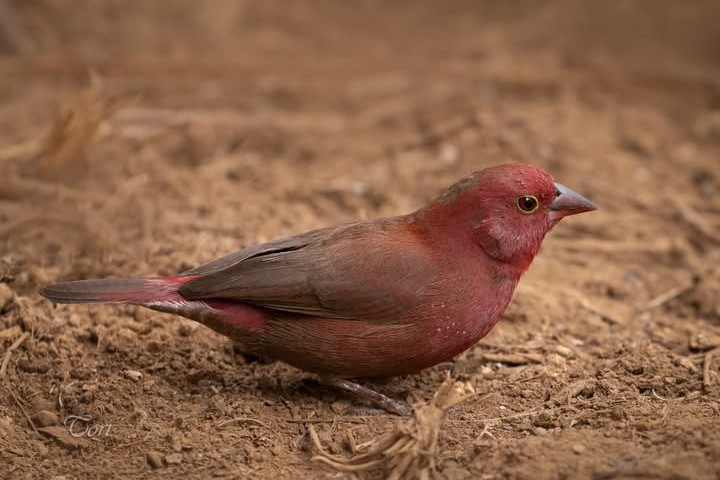
Photographing the African Firefinch can challenge birdwatchers because of its small size and preference for dense vegetation. However, with patience and suitable equipment, birdwatchers can capture beautiful images of this colourful species. Birdwatchers should use a camera with a telephoto lens to photograph small birds from a respectful distance. A lens of approximately 300 mm or longer proves useful, depending on the camera system and shooting conditions. Early morning light often favours bird photography and helps capture the bird’s reddish plumage and finer details without the harsh shadows that midday sunlight creates.
Photographers should use a suitable shutter speed to capture the bird when it is moving or feeding, while remaining patient rather than chasing it through vegetation. It is also important to avoid disturbing nesting sites, approaching too closely or using excessive playback to attract the bird. Responsible photography allows the African Firefinch to continue its natural behaviour while giving visitors an enjoyable wildlife experience. Binoculars can also be useful for locating the bird before attempting to photograph it, particularly when it is partly concealed by grass or bushes.
Include African Firefinch in Your Uganda Birding Safari
Uganda is an excellent destination for birdwatchers interested in exploring different habitats and discovering a wide variety of African bird species. The African Firefinch is one of the smaller species that can add a special highlight to a birding excursion, particularly for visitors interested in finches, waxbills and other seed-eating birds. A Uganda birding itinerary can include Lake Mburo National Park, Murchison Falls National Park, Queen Elizabeth National Park and Budongo Forest, alongside other important birding destinations such as Mabamba Bay Wetland, Kibale Forest, Bwindi Impenetrable National Park and Semuliki National Park. These locations offer different habitats and opportunities to encounter Uganda’s remarkable birdlife, from papyrus specialists and forest birds to savannah species and waterbirds.
At Arcadia Safaris, we organise private and tailor-made Uganda birding safaris for visitors interested in discovering the country’s exceptional avian diversity. Whether you are planning a dedicated birdwatching holiday or wish to combine birding with chimpanzee tracking, gorilla trekking and wildlife viewing, we can help design an itinerary around your interests, travel dates and preferred accommodation. We organise our safaris with private 4×4 safari vehicles and experienced driver-guides. Accommodation options range from comfortable mid-range lodges to luxury properties. Contact Arcadia Safaris today Contact us today for expert advice and a free quote. Email us at info@arcadiasafaris.com or via WhatsApp to plan your Uganda birding safari and explore the habitats of the African Firefinch and many other fascinating bird species.