
Where to See Shoebill in Uganda: Best Places to Spot the Shoebill Stork
Uganda is one of Africa’s most rewarding destinations for birdwatching, with an impressive variety of habitats ranging from tropical rainforests and savannah plains to lakes, rivers and extensive papyrus wetlands. Among the country’s most extraordinary bird species is the shoebill stork, a rare and remarkable wetland bird that attracts birdwatchers, wildlife photographers and nature enthusiasts from around the world; With its enormous shoe-shaped bill, towering height and prehistoric appearance, the shoebill is one of the most unforgettable birds to encounter in the wild. The common question for birders is Where to See Shoebill in Uganda?
For many visitors, seeing a shoebill in Uganda is a special experience that deserves a place on their safari itinerary. The country offers several locations where these fascinating birds can be found, including Mabamba Bay Wetland near Entebbe, the wetlands of Ziwa Rhino Sanctuary and the Nile Delta in Murchison Falls National Park. Other wetland habitats, including Lake Bisina in eastern Uganda, also offer opportunities for dedicated birdwatchers.
Mabamba Bay Wetland is generally the best and most accessible place to see a shoebill in Uganda, particularly for visitors staying in Entebbe or Kampala. Guided canoe excursions take visitors through narrow papyrus channels where shoebills search for fish in shallow water. Travellers exploring northern Uganda can also consider Ziwa Rhino Sanctuary and Murchison Falls National Park, where shoebill watching can complement other wildlife experiences.
In this guide, we explore the best places to see the shoebill in Uganda, how to plan a shoebill-watching excursion, the best time to visit, what other birds you may encounter and how to include this remarkable bird in a wider Uganda birding or wildlife safari.
1. Mabamba Bay Wetland – The Best Place to See Shoebill in Uganda
Mabamba Bay Wetland is widely regarded as the best place to see the shoebill in Uganda. Located on the northern shores of Lake Victoria, west of Entebbe, this Ramsar-listed wetland is characterised by extensive papyrus swamps, shallow waterways and rich aquatic habitats that support the shoebill and numerous other bird species; Its convenient location makes it an excellent destination for visitors staying in Entebbe or Kampala, including travellers who want to enjoy a birdwatching excursion before or after their Uganda safari.
The highlight of a visit to Mabamba is a guided canoe excursion through narrow papyrus channels. Accompanied by experienced local guides, visitors explore the wetland in search of the shoebill as it stands quietly near the water, waiting to catch fish. The bird’s impressive shoe-shaped bill, tall stature and distinctive hunting behaviour make sightings particularly memorable. Early morning boat excursions are generally recommended because they offer favourable light for photography and cooler conditions for exploring the wetland.
Besides the shoebill, birdwatchers may encounter the papyrus gonolek, African jacana, malachite kingfisher, pied kingfisher, African fish eagle, herons and egrets. This diversity makes Mabamba rewarding even for visitors interested in more than one bird species.
Why visit Mabamba Bay Wetland?
- One of Uganda’s most reliable and accessible shoebill-watching destinations.
- Guided canoe excursions through natural papyrus channels.
- Convenient access from Entebbe and Kampala.
- Excellent opportunities for bird photography and general birdwatching.
- A Ramsar-listed wetland with a rich diversity of aquatic and papyrus-associated birds.
- An ideal activity for visitors arriving in Uganda or preparing to depart.

2. Ziwa Rhino Sanctuary – Shoebill Watching Alongside Rhino Tracking
Ziwa Rhino Sanctuary, located in Nakasongola District along the Kampala–Gulu highway, is best known for its successful white rhino conservation programme. However, the sanctuary also protects wetland habitats that support a variety of bird species, including the shoebill. Its Lugogo wetland provides an additional opportunity for visitors hoping to see this remarkable bird while exploring northern Uganda.
Shoebill-watching excursions at Ziwa are arranged with knowledgeable local guides who understand the wetland environment and can help visitors search suitable feeding areas; The experience offers a different perspective from the canoe excursions at Mabamba and can be particularly rewarding for travellers combining wildlife viewing with birdwatching.
One of the main advantages of visiting Ziwa is the opportunity to combine a shoebill search with guided white rhino tracking on foot. Visitors can observe rhinos in their natural environment before exploring the sanctuary’s birding habitats. Other wetland and woodland birds may also be encountered during the visit, depending on the season and prevailing conditions.
Ziwa Rhino Sanctuary sits conveniently along the route between Kampala and Murchison Falls National Park, making it a practical stop on a northern Uganda safari. Rather than organising a separate journey solely for shoebill watching, travellers can include the sanctuary in their itinerary before continuing to Murchison Falls.
Why visit Ziwa Rhino Sanctuary?
- Opportunities to search for shoebills in the Lugogo wetland.
- Excellent combination of birdwatching and white rhino tracking.
- A convenient stop between Kampala and Murchison Falls National Park.
- Guided wildlife experiences in a protected conservation area.
- Opportunities to observe other wetland and woodland bird species.

3. Murchison Falls National Park – Shoebill Watching at the Nile Delta
Murchison Falls National Park is one of Uganda’s premier wildlife destinations and an excellent location to include in a shoebill-watching safari. Besides its spectacular waterfall, savannah wildlife and scenic Nile River, the park protects important wetland habitats that attract numerous bird species. One of the most interesting areas for birdwatchers is the Nile Delta, where the Victoria Nile flows into Lake Albert.
The Nile Delta features shallow waterways, papyrus vegetation and productive feeding grounds that provide suitable habitat for shoebills. Visitors can search for this remarkable bird during a boat excursion from the Paraa area towards the delta. It is important to note that this is a different experience from the popular boat cruise to the bottom of Murchison Falls. Travellers hoping to see the shoebill should specifically request the Nile Delta excursion when planning their safari.
The boat journey is rewarding beyond birdwatching. Visitors may encounter hippos, Nile crocodiles, elephants along the riverbanks and a variety of waterbirds. The surrounding wetland environment also provides excellent opportunities for photography and observing Uganda’s diverse birdlife.
A visit to the Nile Delta can easily complement other activities in Murchison Falls National Park, including game drives in the northern savannah sector, a cruise to the base of the falls and a visit to the top of the waterfall. Although shoebill sightings are not guaranteed, the delta offers a valuable opportunity to search for the species during a wider Uganda wildlife safari.
Why visit Murchison Falls National Park?
- Opportunities to search for shoebills around the Nile Delta.
- A scenic boat excursion towards the point where the Victoria Nile meets Lake Albert.
- Excellent opportunities to see hippos, crocodiles, elephants and other wildlife.
- A combination of birdwatching, game drives and spectacular landscapes.
- An excellent destination for a wider Uganda wildlife safari.

4. Lake Bisina – A Lesser-Visited Wetland for Dedicated Birdwatchers
Lake Bisina, also known as Lake Salisbury, is an important wetland in eastern Uganda and a rewarding destination for birdwatchers interested in exploring less-visited parts of the country. Located in the Lake Kyoga basin, the lake is surrounded by extensive wetland vegetation and supports a variety of aquatic and wetland-dependent bird species.
For visitors planning a specialised Uganda birding safari, Lake Bisina offers another habitat in which to search for the shoebill. Its wetlands are part of the wider network of papyrus swamps and shallow-water environments that support the species in Uganda. However, unlike Mabamba, Lake Bisina is not usually the first recommendation for travellers whose main objective is to see a shoebill during a short visit.
Birdwatching around Lake Bisina can be rewarding because the surrounding wetlands support several species associated with papyrus, open water and marshland habitats. The experience is particularly suitable for birders who want to explore eastern Uganda and include lesser-known birding locations in a longer itinerary.
A visit requires more planning than a standard Mabamba excursion. Travellers should arrange local birding guidance and confirm access conditions before departure. Shoebill sightings are not guaranteed, and the likelihood of encountering the bird may vary according to its movements and the wetland conditions.
Why visit Lake Bisina?
- An additional wetland habitat where shoebills may be encountered.
- A rewarding destination for specialised birdwatching in eastern Uganda.
- Opportunities to explore less-visited wetland landscapes.
- A useful addition to a longer Uganda birding itinerary.

What Makes the Shoebill So Special?
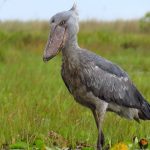
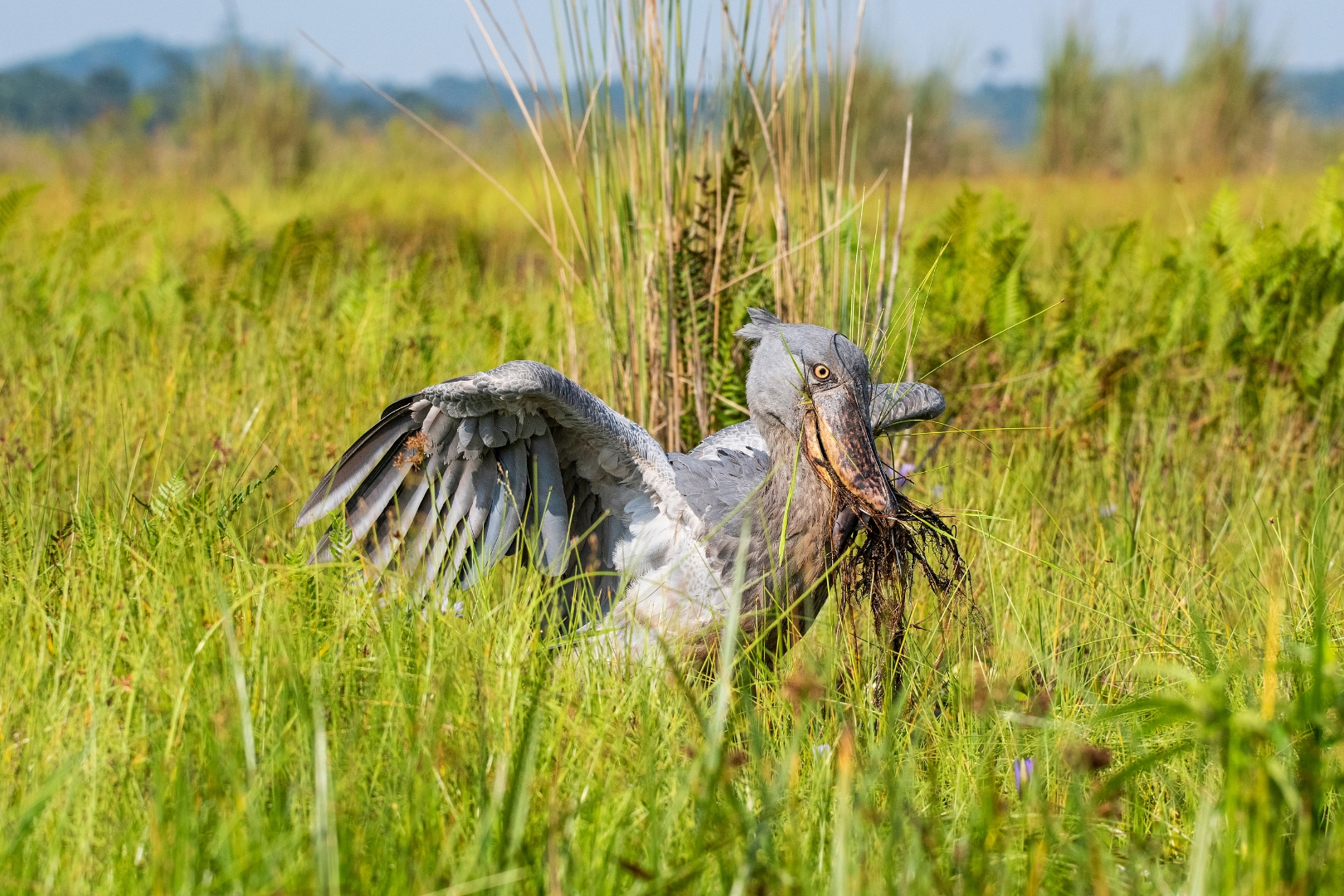
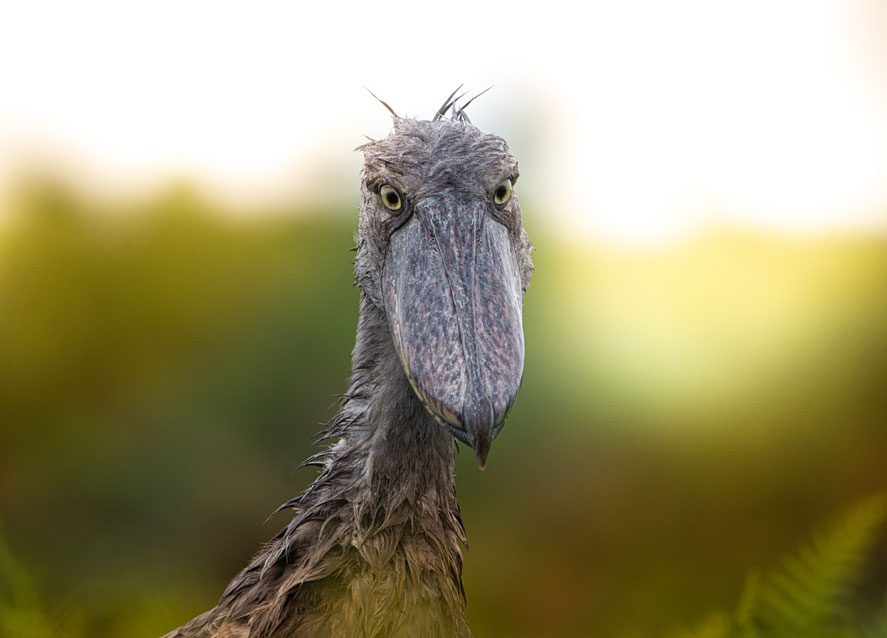
The shoebill (Balaeniceps rex) is one of Africa’s most distinctive and fascinating birds. It is a large, grey wetland bird recognised by its enormous bill, which resembles a wooden shoe or clog. Its unusual appearance, upright posture and deliberate hunting behaviour have earned it a reputation as one of the most remarkable birds in the African wetlands.
An adult shoebill can stand approximately 1.1 to 1.5 metres tall, with a powerful bill that is broad and hooked at the tip. Its grey plumage, long legs and large head make it easy to recognise when it is standing in open water or among papyrus vegetation; Despite its imposing size, the bird is generally quiet and often spends long periods standing almost motionless while waiting for prey.
The shoebill primarily feeds on fish, especially lungfish, which are abundant in some of Uganda’s shallow wetlands. It also feeds on other aquatic animals, including catfish, frogs and other suitable prey. Its hunting strategy relies on patience. Rather than actively chasing fish through the water, it often waits quietly before striking suddenly with its powerful bill.
One of the most interesting behaviours to observe is the shoebill’s ability to remain still for extended periods. Visitors may initially mistake it for a grey stump or a stationary object among the reeds. With patience and the help of an experienced guide, however, it is possible to observe the bird scanning the water, moving slowly through its feeding habitat or making a sudden strike when prey approaches.
The shoebill is also a species of significant conservation concern. Wetland drainage, habitat degradation, disturbance and other human pressures threaten the habitats on which it depends. Protecting Uganda’s papyrus wetlands is therefore essential for the long-term survival of this extraordinary bird.
Best Time to See Shoebills in Uganda
You can observe shoebills in Uganda throughout the year, making the country a suitable destination for shoebill watching in different seasons. However, the quality of a birdwatching excursion may vary depending on rainfall, water levels, vegetation growth and the movement of the birds within their wetland habitats.
For most visitors, the best time of day to search for shoebills is early in the morning. Morning excursions offer cooler conditions, softer light for photography and a good opportunity to observe birds as they feed. At Mabamba, visitors are encouraged to arrange an early departure so that they have enough time to explore the papyrus channels before the day becomes hot.
The dry seasons are generally convenient for travel around Uganda, particularly during June to September and December to February. Roads leading to some wetland destinations may be easier to navigate during drier conditions, although water levels within the wetlands can still change and influence access to feeding areas.
The rainy seasons, usually occurring around March to May and October to November, can also provide rewarding birdwatching opportunities. However, heavy rainfall may affect road conditions, water levels and the time required to reach certain locations.
Ultimately, there is no single month that guarantees a shoebill sighting. The bird is present in Uganda throughout the year, and choosing a suitable location, travelling with experienced local guides and allowing enough time for the search are more important than relying on a particular month.

How to See the Shoebill in Uganda
Shoebill watching is different from conventional wildlife viewing on a savannah game drive. Because the bird inhabits wetlands with dense papyrus vegetation and shallow water, visitors often need to explore its habitat by canoe or boat, accompanied by knowledgeable local guides.
At Mabamba Bay, the experience usually begins at a community landing site. After meeting the guide and receiving a briefing, visitors board a traditional wooden canoe or small motorised boat and enter the wetland through narrow channels. The guide searches for the shoebill along the edges of papyrus vegetation, open-water patches and shallow feeding areas.
The excursion requires patience because shoebills are not always visible immediately. They may stand quietly among the reeds, move to another feeding area or remain hidden by vegetation. Local guides are familiar with the wetland and can use their knowledge of recent sightings and bird behaviour to help visitors locate the species.
At Ziwa, visitors can arrange a guided search in the sanctuary’s wetland habitats, while at Murchison Falls the Nile Delta boat excursion offers another opportunity to search for the bird from the water.
For the best experience, visitors should avoid making unnecessary noise, follow the guide’s instructions and allow the bird to remain undisturbed. A responsible approach improves the quality of the encounter while helping protect the shoebill and its habitat.
Shoebill Photography Tips
Photographing a shoebill in its natural habitat is one of the highlights of a Uganda birding safari. Its unusual appearance, distinctive bill and patient hunting behaviour create excellent photographic opportunities. However, successful photography requires preparation, particularly because visitors usually observe the bird from a canoe or boat.
A camera with a telephoto lens is recommended, as the shoebill may be some distance from the boat. A lens in the 300mm to 600mm range can be useful for capturing detailed images, although the best choice depends on your camera system and photography experience. Binoculars are also valuable for locating the bird and observing its behaviour before taking photographs. Best Places Where to See Shoebill in Uganda
Early morning light is generally favourable for photography, helping to capture the bird’s grey plumage and distinctive features without the harsh shadows associated with midday sunlight; Visitors should also consider bringing a waterproof camera bag or protective cover, as water splashes and occasional rain are possible during canoe excursions.
Most importantly, photographers should respect the bird’s space. Avoid instructing boat operators to approach too closely, making loud noises or disturbing a shoebill simply to obtain a closer photograph. A responsible distance allows the bird to continue feeding and behaving naturally while giving visitors an enjoyable wildlife photography experience.
Why Choose Uganda for a Shoebill-Watching Safari?
Uganda offers a special combination of accessible shoebill habitats, diverse birdlife and outstanding wildlife experiences. Visitors can search for the shoebill in the papyrus channels of Mabamba Bay, explore the wetlands of Ziwa Rhino Sanctuary and take a boat excursion towards the Nile Delta in Murchison Falls National Park.
Another advantage is the ease with which you can combine shoebill watching with other activities. You can arrange a short visit to Mabamba from Entebbe or Kampala, while a longer itinerary can incorporate national parks, forests, lakes and other birding destinations. This flexibility makes Uganda attractive to specialist birdwatchers as well as travellers who want to add a unique birding experience to a conventional wildlife safari.
Whether you are planning a dedicated Uganda birding safari, a shoebill-watching excursion near Entebbe or a wider journey combining wildlife, chimpanzee tracking and gorilla trekking, Uganda offers an excellent opportunity to discover one of Africa’s most extraordinary birds.
Plan Your Shoebill-Watching Safari in Uganda with Arcadia Safaris
At Arcadia Safaris, we organise private and tailor-made Uganda safaris that bring visitors closer to the country’s remarkable wildlife, birdlife and natural landscapes. We can arrange a memorable shoebill-watching excursion at Mabamba Bay Wetland, include birdwatching at Ziwa Rhino Sanctuary or plan a visit to the Nile Delta in Murchison Falls National Park as part of a wider Uganda safari.
Our safari experiences are organised around your interests, travel dates, preferred accommodation category and budget. Whether you are an experienced birdwatcher hoping to photograph the shoebill or a first-time visitor looking to discover Uganda’s unique wildlife, we can help create an itinerary that suits your expectations.
You can combine shoebill watching with game drives, Nile boat cruises, chimpanzee tracking, mountain gorilla trekking and cultural experiences across Uganda; Our private safari arrangements include a dedicated 4×4 safari vehicle and an experienced driver-guide, with accommodation options ranging from comfortable mid-range properties to luxury lodges.
Contact Arcadia Safaris today to start planning your Uganda shoebill-watching safari. Let us help you explore Mabamba Bay, Murchison Falls and other remarkable birding destinations while discovering the natural beauty of the Pearl of Africa. Thank you for choosing us. Let’s explore the wilds together!